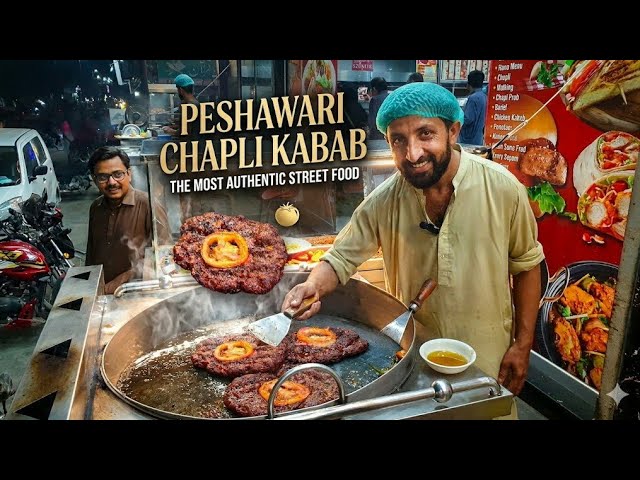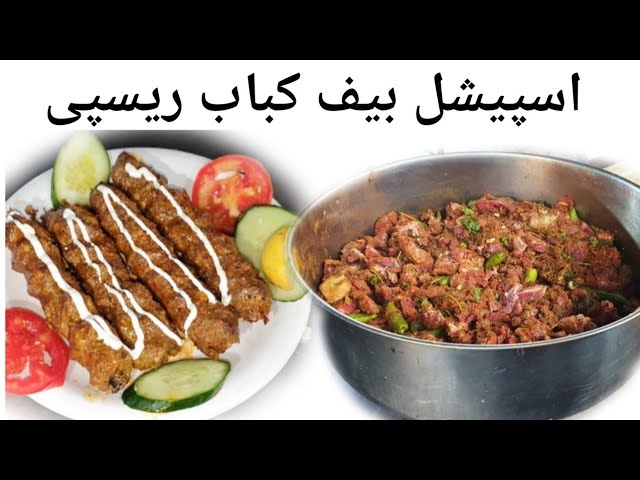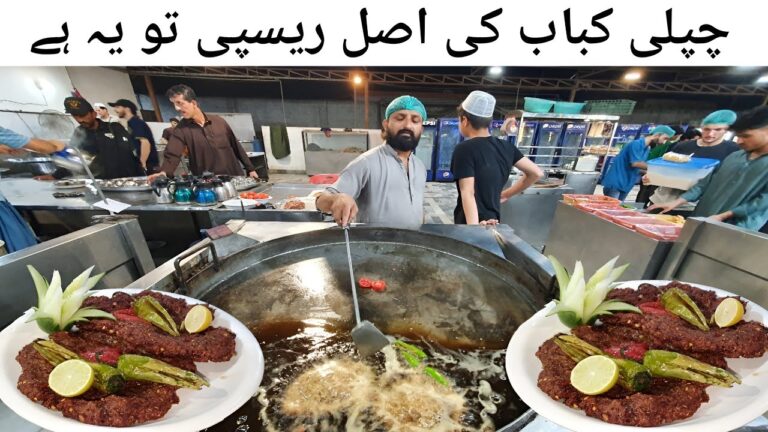
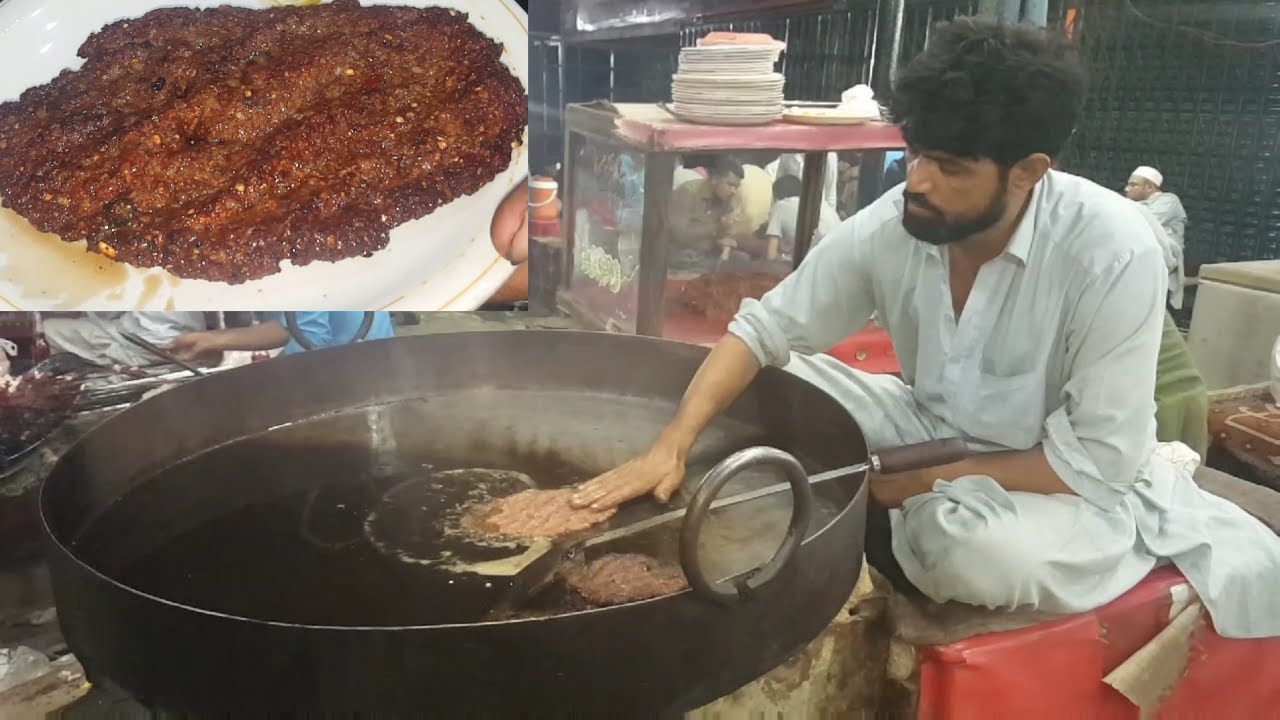
If you’ve ever driven past Al Asif Square in Sohrab Goth after sunset, you already know what this recipe is about. This is Karachi’s Pashtun heart — a stretch of Afghan and Peshawari restaurants where chapli kababs sizzle in wide iron pans of hot animal fat, fed to hundreds of customers every night. The recipe below is that style — commercial, generous, and unapologetically spicy.
What makes this authentic Peshawari chapli kabab recipe different from restaurant versions elsewhere is the technique: onion juice instead of chopped onion, dried fenugreek leaves (kasuri methi) mixed into the meat, a serious amount of red chili, and — most importantly — no resting time. The mixture goes straight from the bowl to the hot fat. This is a 2.5 kg batch, meant for a big gathering or Bakra Eid dawat.
If you want the standard Khyber Shinwari 2 kg commercial version with corn flour, see our main pillar recipe. For smaller home batches, our A-One 1 Kg version or Khan Jee Beef 750g are easier for weeknight cooking. But if you want the real Al Asif Square experience — spicier, fattier, faster — this is the one.
📍 Where to Eat the Original in Karachi
Area: Al Asif Square, Sohrab Goth
Address: Al Asif Square, Superhighway, Sohrab Goth, Karachi
Style: Karachi’s biggest Pashtun and Afghan food hub — chapli kababs, kabuli pulao, afghani tikka
Best Time to Visit: After 7:00 PM daily — this is when the fresh batches start frying
Location: Open in Google Maps
Can’t make it to Sohrab Goth? The 2.5 kg recipe below is the exact Al Asif Square style — recreated for your kitchen.
Watch the complete recipe above before you start cooking.
What Makes This Al Asif Square Chapli Kabab Different
Onion juice instead of chopped onion: Most chapli kabab recipes use finely chopped onion. Al Asif Square style uses onion juice — onions are pureed and the pulp is squeezed out. Only the juice goes into the mince. This gives moisture and flavour without any onion pieces breaking the smooth texture.
Dried fenugreek leaves (kasuri methi): Half a cup for 2.5 kg mince — this is the ingredient most home recipes skip completely. Kasuri methi adds a subtle bitter-herbal note that lifts the whole flavour profile and is signature to authentic Pashtun-style chapli kababs.
Serious red chili quantity — 4-5 tsp: This version is properly spicy, not restaurant-mild. Al Asif Square regulars come specifically for the heat. If you can’t handle it, reduce to 2 tsp, but the authentic Pashtun style is genuinely hot.
No corn flour, no binder: Unlike most chapli kabab recipes, this one uses no corn flour or gram flour. The kababs bind through the meat’s own protein and the onion juice’s moisture. This gives a purer, meatier flavour but requires very hot animal fat to hold shape.
Fry immediately, do not rest the mixture: This is critical. Salt draws water from the vegetables over time, making the mixture watery and unmanageable. Al Asif Square’s kabab makers mix, shape, and fry in one continuous flow — never let the mixture sit.
The Complete Al Asif Square Chapli Kabab Recipe
Note: This is a 2.5 kg batch — designed for 15–20 people or Bakra Eid dawat. This is the Sohrab Goth commercial style, spicier and heavier than the standard Khyber Shinwari version in our pillar recipe. For smaller batches, our 1 kg A-One version is easier for home cooking.
Tips Before You Start
Use beef with 20% fat minimum: Because this recipe has no binder, the meat’s own fat is what holds the kabab together. Ask your butcher for beef mince with visible fat marbling — leaner cuts will not hold shape.
Make onion juice properly: Puree 1 kg of onions in a food processor, then transfer to a muslin cloth and squeeze all the juice out. Discard the pulp — you only need the liquid. Skipping this step and using chopped onions will make the recipe watery and impossible to fry.
Crush spices coarsely, never powder: Coriander, cumin, anardana, and ajwain must be coarsely crushed in a mortar. If you powder them, the kababs will taste flat and generic. The coarse texture is what you feel and taste in every bite.
Use rendered animal fat (tael/beef suet): This is what makes Al Asif Square kababs taste different from home versions. If you can’t source pure animal fat, use 50/50 mix of ghee and beef suet. Plain oil will still work but won’t have the same depth.
Do not skip the kasuri methi: Half a cup for 2.5 kg mince is exact — this is what gives the authentic Pashtun herbal note. Without it, your kababs will taste like a generic Peshawari version, not Sohrab Goth style.
Storage and Serving
Uncooked mixture should be fried immediately — do not refrigerate or the salt will draw out moisture. For advance prep, shape the kababs, freeze them on a parchment tray, then transfer to a freezer bag. They keep 2–3 months and can be fried directly from frozen (add a minute per side).
Cooked kababs are best straight off the tawa. At Al Asif Square they’re served with hot Afghan naan, sliced raw onions, green chili chutney, and a squeeze of lemon. For a proper spread, pair with our Shinwari Mutton Karahi or Mutton Rosh. End the meal with kahwah (green tea) — that’s the traditional Pashtun way.
Authentic Peshawari Chapli Kabab (Sohrab Goth Style)
Ingredients
Method
- Puree 1 kg onions in a food processor. Transfer to a muslin cloth and squeeze out all the juice. Discard pulp — you’ll need only the juice (~400ml). This is essential; do not skip.
- Coarsely blend green chilies. Deseed and finely chop tomatoes. Chop fresh coriander. Coarsely crush coriander seeds, cumin seeds, anardana, and ajwain in a mortar — never powder them.
- In a large vessel, combine beef mince, onion juice, blended green chilies, all crushed spices, red chili powder, and salt. Mix vigorously by hand for 8-10 minutes until sticky and cohesive.
- Add chopped tomatoes, fresh coriander, and kasuri methi. Mix quickly for 2 more minutes. Do NOT let the mixture rest — shape and fry immediately.
- Heat animal fat (or half ghee, half suet) in a wide flat tawa on medium-high heat. With wet hands, shape into thin flat discs (15-20 kababs). Slide gently into hot fat, fry 4-5 minutes per side until deep golden brown with crispy edges. Serve immediately with hot Afghan naan, sliced onions, and lemon wedges.
Video
Notes
Frequently Asked Questions
Why onion juice instead of chopped onion?
Chopped onions release water slowly during frying, which can make kababs fall apart — especially in a no-binder recipe like this one. Onion juice gives all the flavour and moisture without the risk. This is how Al Asif Square and most Sohrab Goth chapli spots handle it. If you use chopped onions here, you’ll need to add corn flour as a binder, which changes the taste.
Is this recipe too spicy for kids or older family members?
The 4-5 tsp of red chili is on the hot side. For a milder version, reduce to 1.5-2 tsp and skip the extra green chilies. The kababs will still taste authentic — just less fiery. Al Asif Square regulars specifically come for the heat, but there’s nothing wrong with adjusting for your table.
What if I can’t find kasuri methi (dried fenugreek leaves)?
Kasuri methi is available at almost every Pakistani grocery store — it’s usually in the spice section. If you truly can’t find it, you can skip it, but the kababs will lose the signature Sohrab Goth herbal note. Do not substitute with fresh fenugreek (methi saag) — the flavour is completely different.
Why is there no corn flour or gram flour in this recipe?
Traditional Sohrab Goth style relies on the meat’s own protein and fat to hold the kababs together — no external binder needed. This gives a purer, more meaty flavour. It requires hot animal fat and immediate frying, though. If you want the safer version with corn flour binder, use our Khyber Shinwari pillar recipe instead.
Can I make this recipe with less quantity (like 1 kg)?
Yes, but for smaller quantities, our A-One 1 Kg version is easier because it uses corn flour and is more forgiving. If you want to scale down this Sohrab Goth recipe: for 1 kg mince, use 400g onion juice, 40g green chilies, and multiply spices by 0.4. But be warned — the no-binder technique is harder to control at smaller quantities.
What kind of pan should I use for frying?
A wide, flat, thick-bottomed tawa is ideal — cast iron works best. At Al Asif Square they use huge iron pans that hold a small pond of hot animal fat. At home, a heavy-bottomed karahi or a wide non-stick pan works. Make sure the pan is wide enough to fit 3-4 kababs at once without crowding.
Join the Cooking with Kawish Community
Instagram: @cooking_with_kawish — Tag us to get featured!
Facebook: Cooking with Kawish
YouTube: Subscribe for new recipes
TikTok: @cookingwithkawish
Happy Cooking!