White Beef Biryani Recipe (Karachi Degi Style with Dakhni Mirch)
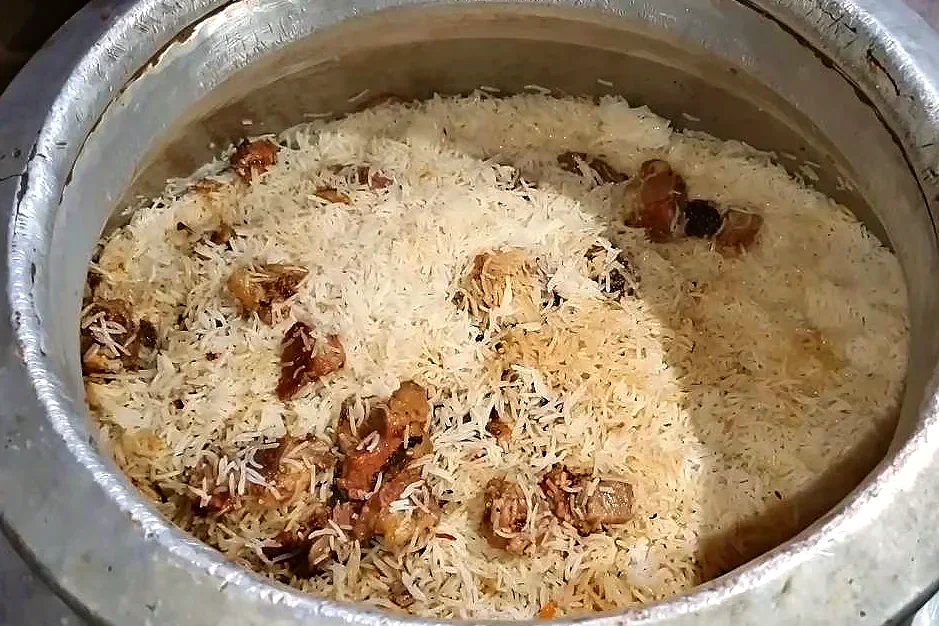
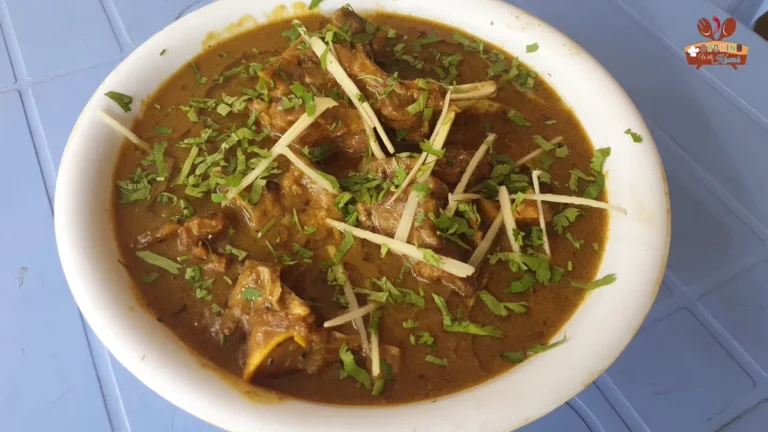
White beef biryani is Karachi’s quieter biryani: no red chilli powder, no turmeric, no food colour. Its heat comes from dakhni mirch (white pepper) and green chillies, and its flavour from a slow-cooked beef yakhni. We filmed this degi version at Asad Pakwan Biryani Centre in Karachi, cooked in one deg with 4 kg rice and 4 kg beef. Below you’ll also find a scaled-down 1 kg and 2 kg version for home.

Serves: 25 people (4 kg rice + 4 kg beef) | Prep: 30 min | Cook: about 2 hours
Difficulty: Medium (big-batch timing) | Best for: dawats, weddings, Eid
Heat level: Mild but warm (white pepper, not red chilli)
Watch the White Beef Biryani Video
The full 9-minute video plays inside the recipe card below. To jump straight to one step, open it on YouTube:
What Makes Degi White Beef Biryani Different
The beef cooks in a spiced yakhni, not a masala. Raw beef, whole spices, onion, tomato, yogurt, oil and 2.5 litres of water go into the deg together. After about 1.5 hours on low flame the beef is soft and the liquid has turned into a light, glossy yakhni that the rice soaks up during dum.
The colour stays white on purpose. There is no turmeric, no red chilli powder and no colour. The only red you see is a little chilli flakes in the final layer. The heat comes from white pepper and green chilli paste.
The rice goes in at two stages. Half the rice is added at about 70% cooked and the other half at 90%. The softer bottom layer drinks the yakhni, while the firmer top layer stays long and separate.
What Is Dakhni Mirch?
Dakhni mirch is what many Karachi spice shops call white pepper (safed mirch). It comes from the same plant as black pepper, but the dark outer skin is removed, so it gives heat without darkening the food. That is exactly why it is the backbone of white biryani, white karahi and white korma. This recipe uses it twice: 2 tbsp in the beef yakhni and 1–2 tbsp in the final layer. For more on this spice, read our dakhni mirch guide.
If you can’t find it labelled as dakhni mirch, ask for safed mirch or white pepper powder. Black pepper will work for flavour, but the rice will look speckled and grey.
Ingredient Notes and Substitutions
- Beef: use bone-in or boneless chunks with some fat, like shoulder or undercut mix. Very lean meat turns dry during the long cook.
- Rice: aged long-grain basmati (sella or 1121) holds up best in a big deg. Soak it for only 10–15 minutes before boiling.
- Green chilli paste: the video uses 5–6 tbsp for 4 kg of beef. Start with 5 if your chillies are very hot.
- Dried plums (aloo bukhara): 10–20 go in the final layer for a mild sourness. No plums? Add 1 tbsp lemon juice per kg of meat.
- Nutmeg and mace (jaifil, javitri): just 1 tsp each for the full deg. More than that makes the biryani taste bitter.
- Chicken or mutton: mutton follows the beef timing. Chicken needs only 20–25 minutes in the yakhni.
White Beef Biryani Ingredients for 1 kg, 2 kg and 4 kg
Every ingredient from the video, grouped by step. Pick the column for the amount you are cooking.
| Ingredient | 1 kgserves 6–7 | 2 kgserves 12–13 | 4 kg degserves 25 (video) |
|---|---|---|---|
| Yakhni spice base (Step 1) | |||
| Cumin seeds | 1 tbsp | 2 tbsp | 4 tbsp |
| Fennel seeds | 2 tsp | 1¼ tbsp | 2½ tbsp |
| Coriander seeds | 1½ tsp | 1 tbsp | 2 tbsp |
| Star anise | 1 | 2 | 4–5 |
| Cloves | 3 | 5–6 | 10–12 |
| Black cardamom | 1 | 2 | 4–5 |
| Green cardamom | 2 | 4 | 7–8 |
| Black peppercorns | 4–5 | 8–10 | 15–20 |
| Cinnamon stick | 1½-inch piece | 3-inch piece | 3 pieces (2-inch) |
| Bay leaves | 1–2 | 3 | 5–6 |
| Tomato / onion (sliced) | ½ tomato, ¼ onion | 1 tomato, ½ onion | 2 tomatoes, 1 onion |
| Salt | 1–1¼ tbsp | 2–2½ tbsp | 4–5 tbsp |
| Green chilli paste | 1½ tbsp | 3 tbsp | 5–6 tbsp |
| Ginger garlic paste | 1 tbsp | 2 tbsp | 4 tbsp |
| White pepper (dakhni mirch) | 1½ tsp | 1 tbsp | 2 tbsp |
| Beef and liquids (Step 2) | |||
| Beef | 1 kg | 2 kg | 4 kg |
| Yogurt | 125 g | 250 g | 500 g |
| Oil for yakhni | 125 ml | 250 ml | 500 ml |
| Water | about 750 ml | 1.3 litres | 2.5 litres |
| Beef cooking time (low flame) | about 1 hour | about 1¼ hours | about 1½ hours |
| Aromatic layer (Step 4) | |||
| Mint and coriander | small handful each | ¼ bunch each | ½ bunch each |
| Whole green chillies | 3 | 5–6 | 10–12 |
| Cumin seeds | 2½–3 tsp | 1½–2 tbsp | 3–4 tbsp |
| Fennel seeds | 1½ tsp | 1 tbsp | 2 tbsp |
| White pepper (dakhni mirch) | ¾–1½ tsp | ½–1 tbsp | 1–2 tbsp |
| Red chilli flakes | 1½ tsp | 1 tbsp | 2 tbsp |
| Nutmeg powder | ¼ tsp | ½ tsp | 1 tsp |
| Mace powder | ¼ tsp | ½ tsp | 1 tsp |
| Fried onion | 12 g (small handful) | 25 g | 50 g |
| Dried plums (aloo bukhara) | 3–5 | 6–10 | 10–20 |
| Rice and dum (Steps 5–6) | |||
| Basmati rice (soaked 10–15 min) | 1 kg | 2 kg | 4 kg |
| Rice water for dum | 125 ml | 250 ml | 500 ml |
| Hot oil to finish | 125 ml | 250 ml | 500 ml |
| Dum time | 5 min high + 8–10 min low | 5 min high + 10 min low | 5 min high + 10–12 min low |
The 4 kg column is the exact recipe from the video. The 1 kg and 2 kg columns are scaled down by us. A small pot loses water faster, so the 1 kg version uses a little more than a quarter of the water. Salt and chillies never scale perfectly: taste the yakhni before the rice goes in.
Step-by-Step: How the Degi White Beef Biryani Is Made
1. Make the spice base
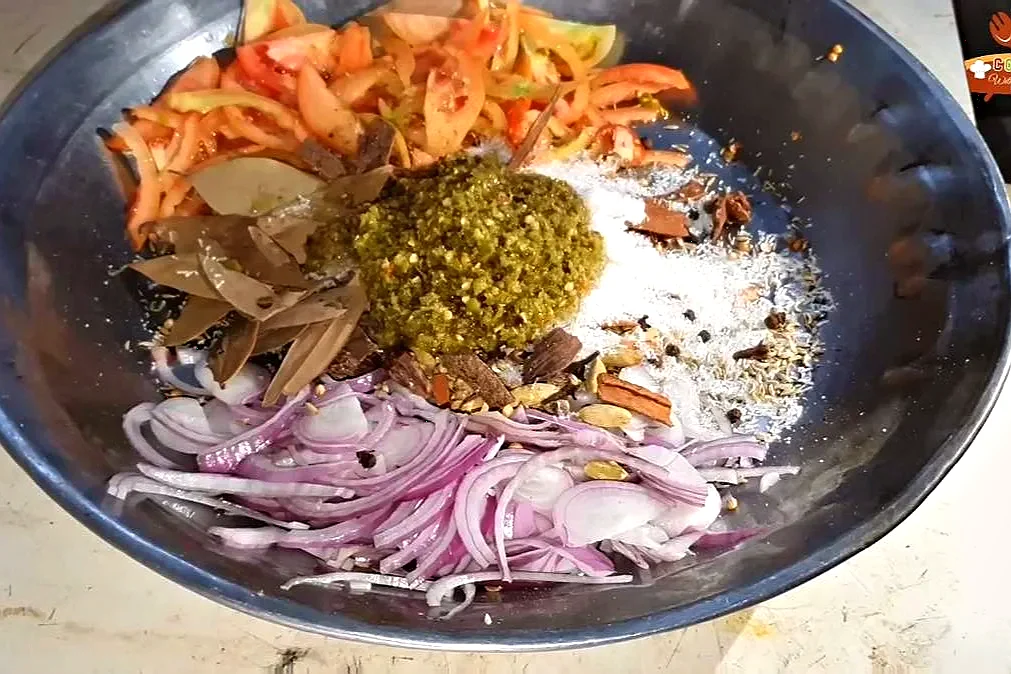
On one tray, the chef combines sliced tomato and onion with all the whole spices: cumin, fennel, coriander seeds, star anise, cloves, both cardamoms, black peppercorns, cinnamon and bay leaves. Salt, green chilli paste, ginger garlic paste and white pepper go on the same tray, so everything enters the deg at once.
2. Add the beef, yogurt, oil and water
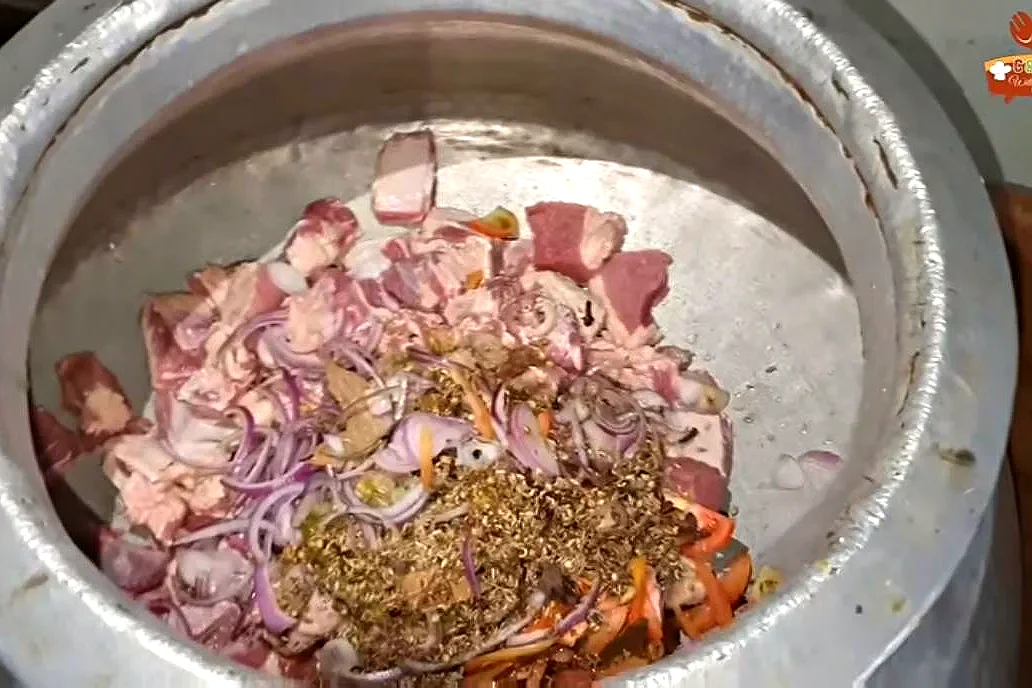
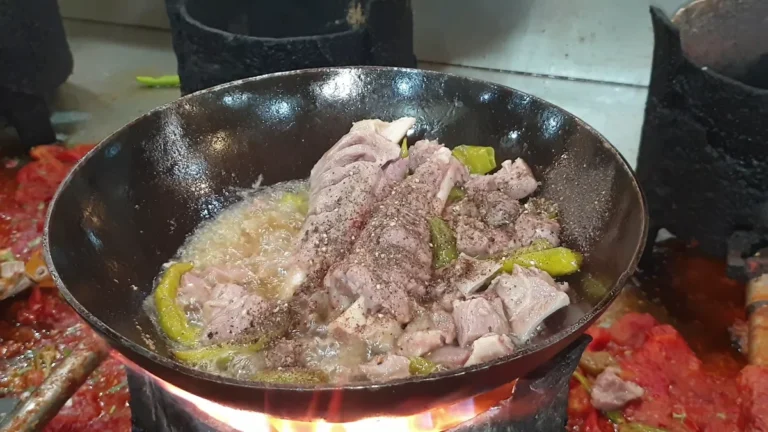
The 4 kg of beef goes into the deg first, then the whole spice tray. The chef adds 500 g yogurt and 500 ml oil, then 2.5 litres of water.
3. Cook the yakhni until the beef is soft

Cook on high flame for 5 minutes, then cover and keep it on low flame. In the video the beef took almost 1.5 hours to become tender. Always press a piece between two fingers before moving on. If it resists, keep cooking, because the dum will not soften it further.
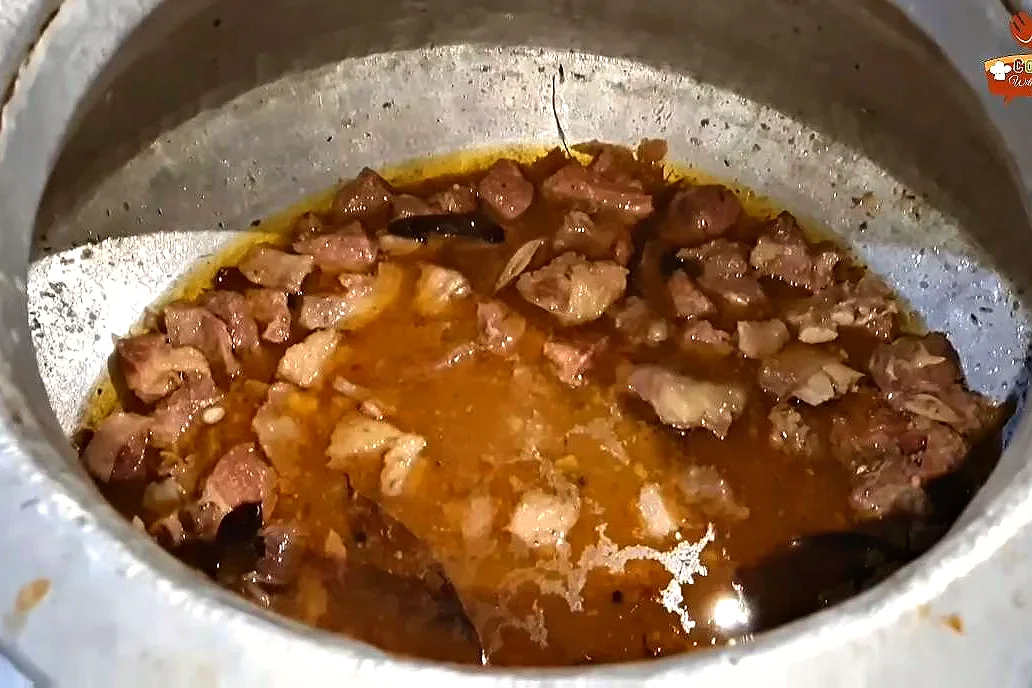
4. Add the aromatic final layer
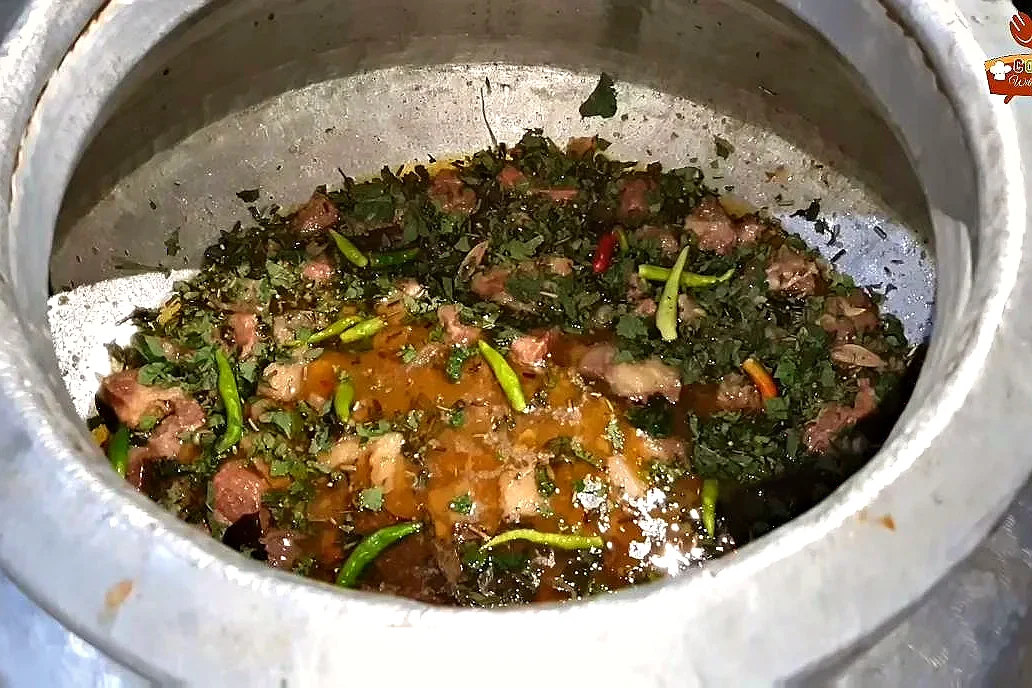
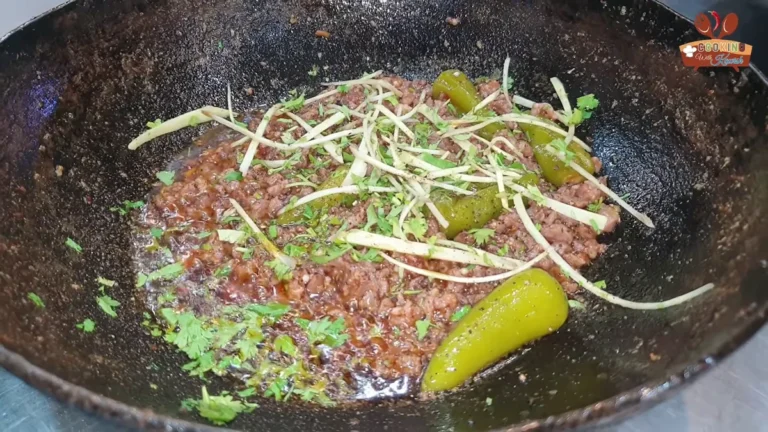
Over the cooked beef, add half a bunch each of coriander and mint and 10–12 small whole green chillies. Then add cumin and fennel seeds, white pepper, 50 g fried onion, 2 tbsp red chilli flakes, 1 tsp nutmeg, 1 tsp mace and the dried plums. Don’t stir it all in. This layer sits between the meat and the rice and perfumes both.
5. Layer the rice in two stages
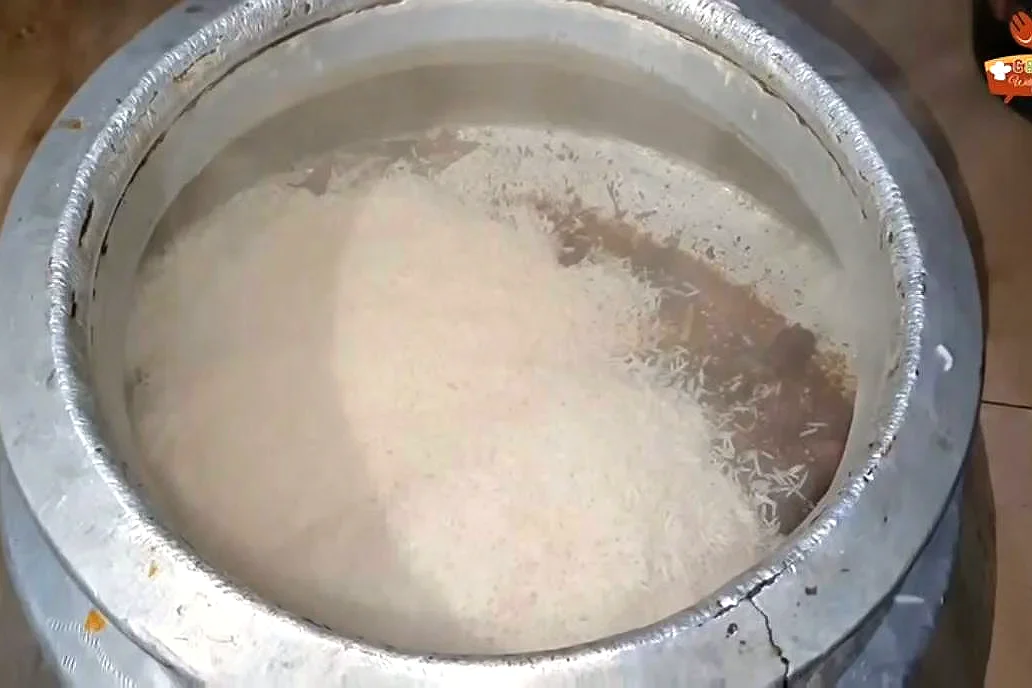
Boil the soaked rice. When it is 65–70% done, lift out half (2 kg) and spread it over the beef. Let the rest cook to about 90% and spread it on top.
6. Dum and oil finish
Cook on high flame for 5 minutes, pour in half a litre of the rice boiling water, cover tightly and keep it on low flame for 10–12 minutes. Finally, pour the remaining 500 ml of hot oil over the rice. Then mix gently from the sides with a wide spatula and serve.
The Complete White Beef Biryani Recipe
Original Karachi Degi White Beef Biryani (Asad Pakwan Style)
Ingredients
Method
- In a large commercial pot (Deg), add 4kg beef, tomatoes, sliced onions, and all the spices mentioned in Step 1. Add 500g yogurt and 500ml cooking oil. Pour in 2.5 liters of water.
- Cover and cook on high flame for the first 5 minutes. Then, reduce the heat to low and simmer for approximately 1.5 hours. The goal is to get the meat 100% tender while maintaining a rich gravy (Yakhni).
- Once the meat is tender, add the fresh herbs (coriander/mint), whole green chilies, plums, fried onions, and the secondary spices (nutmeg, mace, chili flakes, and white pepper). This creates the final aromatic punch of the Biryani.
- Boil 4kg of soaked Basmati rice.
- Layer 1: Take out 2kg of rice when it is 70% cooked and spread it over the beef masala.
- Layer 2: Let the remaining 2kg of rice cook until it is 90% done, then spread it as the top layer.
- Add 1/2 liter of the leftover rice boiling water over the top. Cover tightly and cook on high flame for 5 minutes, then on low flame for 12 minutes.
- After the Dum, pour the remaining 500ml of hot cooking oil over the rice to give it that professional shine and non-stick texture. Mix gently from the sides and serve.
Video
Notes
White Biryani Problems and How to Fix Them
- The rice turned yellow or grey: turmeric, too much chilli flakes or black pepper instead of white pepper. Keep the final layer light and use dakhni mirch.
- The bottom is mushy: the yakhni was too thin or the bottom rice was over 70% cooked. Reduce the yakhni until it looks glossy, not watery, before layering.
- The top rice is hard: the lid wasn’t tight or you skipped the rice water. Seal the deg with foil or dough and add the 500 ml rice water before dum.
- The beef is chewy: it went into the rice stage too early. Beef time depends on the cut, so test it rather than trusting the clock.
- It tastes flat: usually not enough salt in the yakhni. It should taste slightly salty on its own, because the rice will absorb it.
Variations
- White chicken biryani: same spices, but chicken needs only 20–25 minutes in the yakhni. See our degi chicken biryani for chicken rice timings.
- Mutton white biryani: follow the beef timing and start checking at 1 hour 15 minutes.
- Less heat: halve the green chilli paste and skip the chilli flakes. The white pepper alone gives a gentle warmth.
Serving and Storing White Beef Biryani
Serve it hot with zeera raita and kachumber salad. The cool yogurt balances the white pepper. Leftovers keep for up to 3 days in the fridge in an airtight box. To reheat, sprinkle a little water over the rice and warm it covered on low flame, so it steams instead of drying out.
White Beef Biryani FAQs
Is dakhni mirch the same as white pepper?
Yes. In Karachi, dakhni mirch is the common name for white pepper (safed mirch). It gives heat without changing the colour of the rice, which is why white biryani uses it instead of red chilli powder.
Why is there no red chilli powder in white biryani?
Red chilli powder and turmeric would colour the rice. White biryani gets its heat from white pepper and green chillies, so it stays pale while still tasting spicy.
Can I use black pepper instead of dakhni mirch?
You can for flavour, but the rice will look speckled. For the proper white look, use white pepper powder.
Why is the rice added at 70% and 90%?
The softer bottom layer absorbs the leftover yakhni without breaking, while the firmer top layer finishes cooking in the steam. If all the rice is cooked to the same point, either the bottom turns to paste or the top stays raw.
How many people does 4 kg white beef biryani serve?
About 25 people as a main dish. The 1 kg version serves 6–7.
More Biryani and Yakhni Recipes
- Karachi Beef Biryani: the red, spicy degi cousin of this recipe.
- Al Tawakkal Beef Pulao: another beef yakhni rice, but without the biryani layers.
- Raseeli Karachi Chicken Biryani: 5 kg chicken biryani for big dawats.
- Degi Danedar Beef Korma: the classic partner to biryani at Karachi weddings.