
Chicken Reshmi Kabab Recipe (Soft BBQ Kabab, Khyber Shinwari Method)
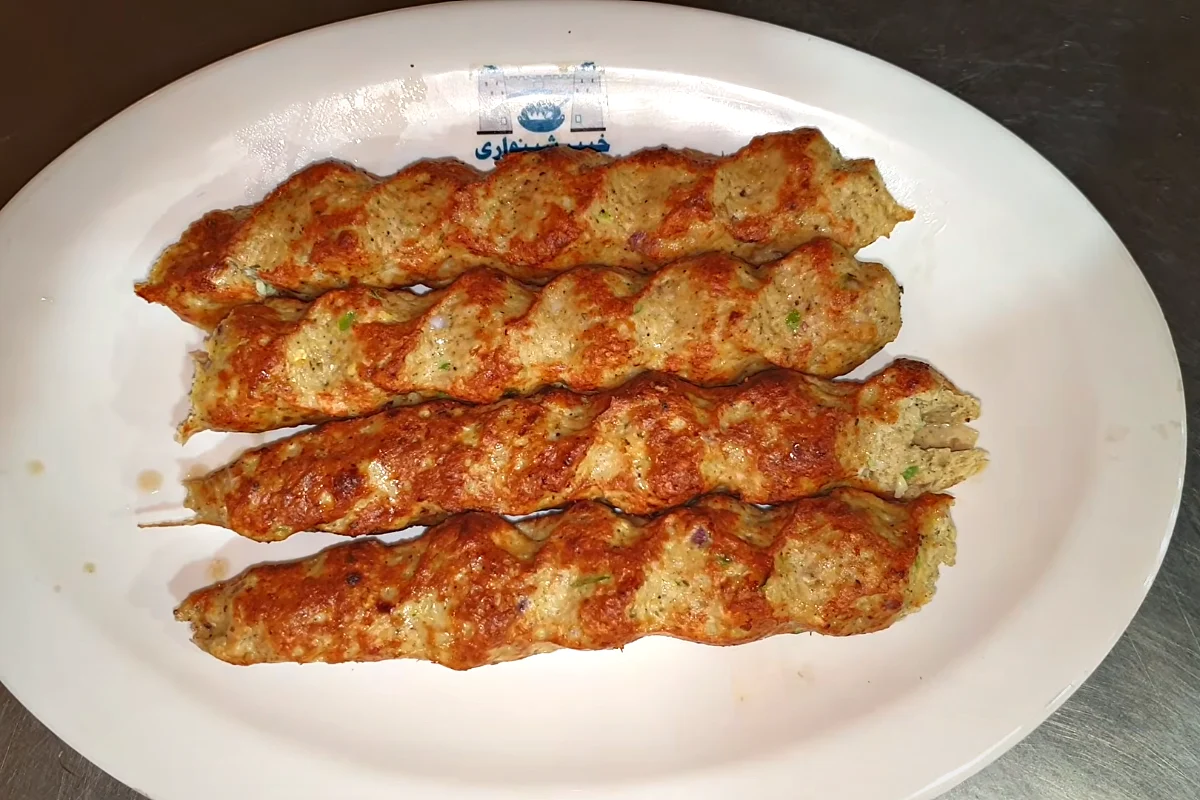
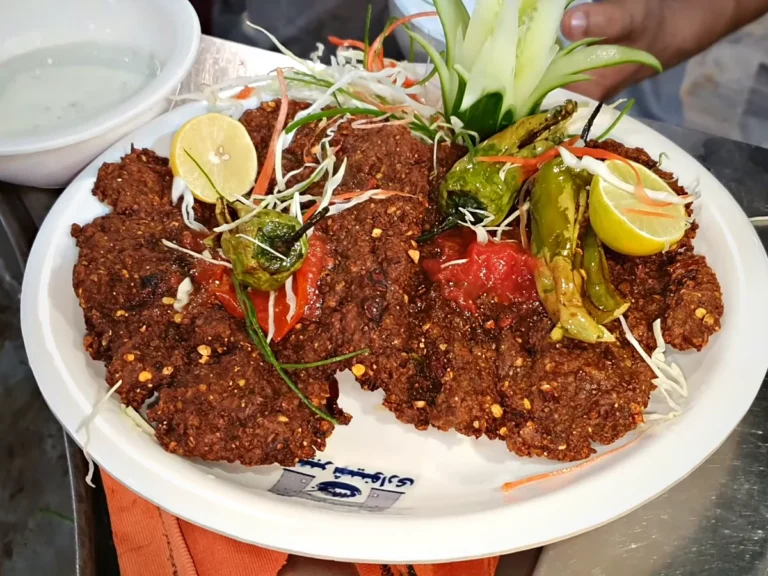
Chicken reshmi kabab is a soft, pale seekh kabab made from finely minced chicken. Reshmi means silky, and a good one should feel almost smooth when you bite it. We filmed this version at Khyber Shinwari Restaurant in Karachi, where it is made with no cream and no cashews: just chicken, a little fat, onion, green chilli, ginger, garlic and a few dry spices. Below is what the video shows, plus how to make it on a home grill or in the oven.
Makes: 8 skewers (1 kg chicken) | Prep: 25 min + 30 min chilling | Grill: 8–10 min
Difficulty: Medium (shaping takes practice) | Best for: BBQ nights, Eid, parties
Heat level: Mild to medium, from green chillies and pepper
Watch the Chicken Reshmi Kabab Video
The full video plays inside the recipe card below. To jump straight to one step, open it on YouTube:
What Makes This Reshmi Kabab Different
No cream, no cashews. Many online recipes load reshmi kabab with cream, cashew paste and egg. This BBQ kitchen skips all of them. The softness comes from finely minced chicken and a little fat.
Fat is the secret. Near the end, white pieces that look like chicken fat go into the mix before mincing. Fat melts on the grill and keeps the kabab juicy. At home, cold butter does the same job.
Whole ingredients, minced together. The chicken cubes, garlic, ginger, onion, green chillies and spices are mixed first and minced together. The flavour spreads evenly, and the green chilli shows up as small flecks.
The spiral finish. The kababs are pressed onto long skewers and marked with a spiral pattern by hand. The ridges turn golden and slightly crisp over the coals.
Ingredient Notes and Substitutions
- Chicken: breast alone can turn dry. Use mostly breast with some thigh, or add the full amount of fat.
- Chicken fat: ask your butcher for the fat and skin trimmings. Cold unsalted butter is the easiest home swap.
- The powders: the video shows crushed black pepper, a white powder, a brown powder and a yellow one, with no labels. We list white pepper, roasted cumin and a pinch of turmeric as the closest match. Salt is not shown separately, so add it to taste.
- Onion: squeeze chopped onion in a cloth before mincing. Extra water makes the mix too soft to hold on a skewer.
Chicken Reshmi Kabab Ingredients for 500 g, 1 kg and 2 kg
| Ingredient | 500 g chicken4 skewers | 1 kg chicken8 skewers | 2 kg chicken16 skewers |
|---|---|---|---|
| Chicken and fat | |||
| Boneless chicken (breast with some thigh) | 500 g | 1 kg | 2 kg |
| Chicken fat, or cold butter | 25 g | 50 g | 100 g |
| Fresh | |||
| Garlic, chopped | 1½ tsp | 1 tbsp | 2 tbsp |
| Ginger, chopped | 1½ tsp | 1 tbsp | 2 tbsp |
| Onion, roughly chopped | ½ small | 1 medium | 2 medium |
| Green chillies | 3–4 | 6–8 | 12–15 |
| Dry spices | |||
| Salt | ¾ tsp | 1½ tsp | 1 tbsp |
| Black pepper, crushed | ½ tsp | 1 tsp | 2 tsp |
| White pepper | ½ tsp | 1 tsp | 2 tsp |
| Roasted cumin powder | ½ tsp | 1 tsp | 2 tsp |
| Turmeric | a pinch | ¼ tsp | ½ tsp |
| For shaping and grilling | |||
| Oil or ghee (hands and brushing) | 1 tbsp | 2 tbsp | 4 tbsp |
The restaurant does not share its quantities, and the video has no captions. The ingredients and their order are what the video shows; the amounts are our suggestion. Where a powder is hard to identify on camera, we list the closest common spice and say so in the notes below.
Step-by-Step: How Chicken Reshmi Kabab Is Made
1. Cube the chicken
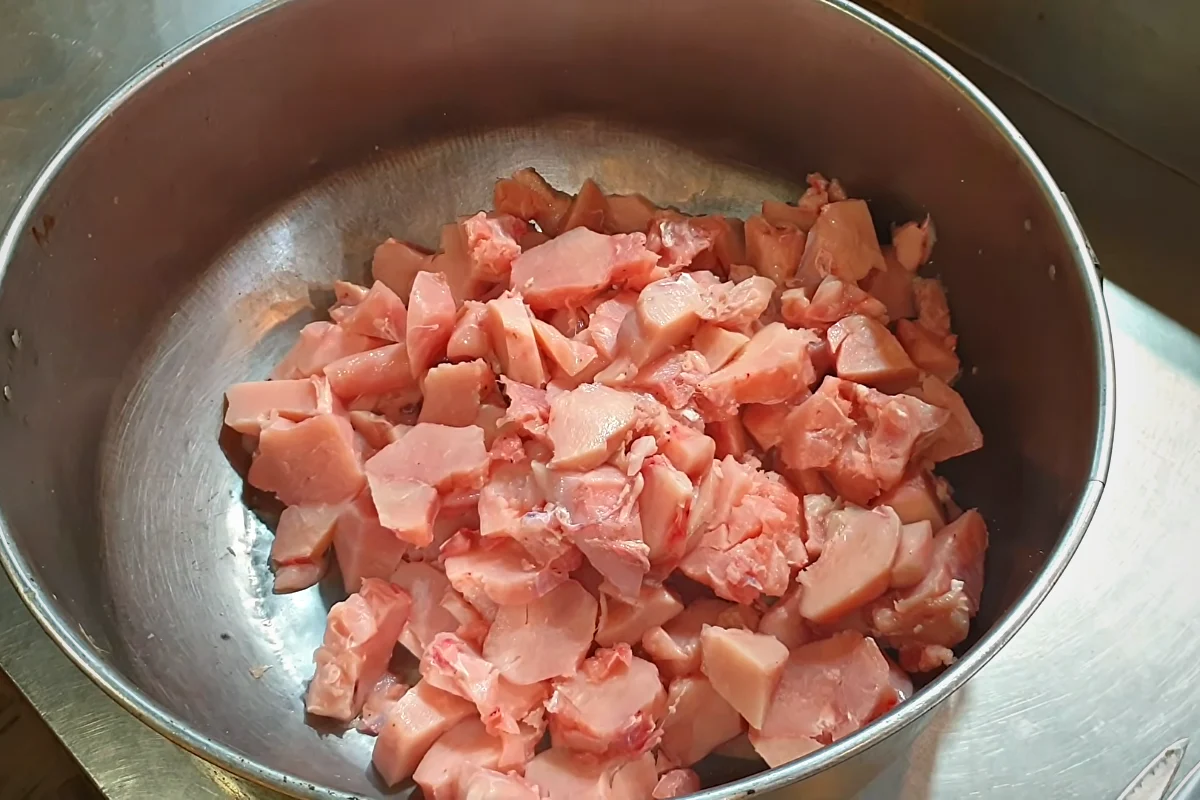
Cut the boneless chicken into cubes and put them in a large bowl. The restaurant keeps the chicken very cold, which helps the kabab hold together later.
2. Add garlic, ginger and the dry spices
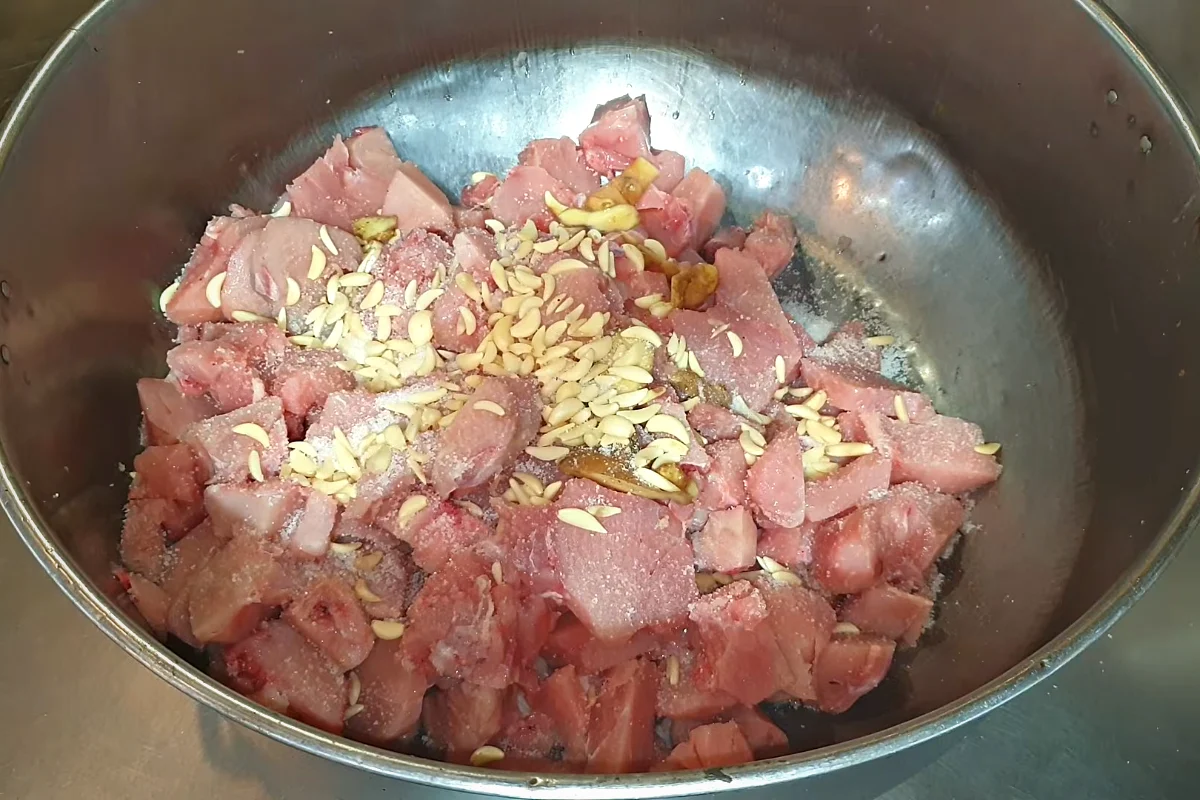
Add the chopped garlic and ginger, then the crushed black pepper, white pepper, cumin powder and salt.
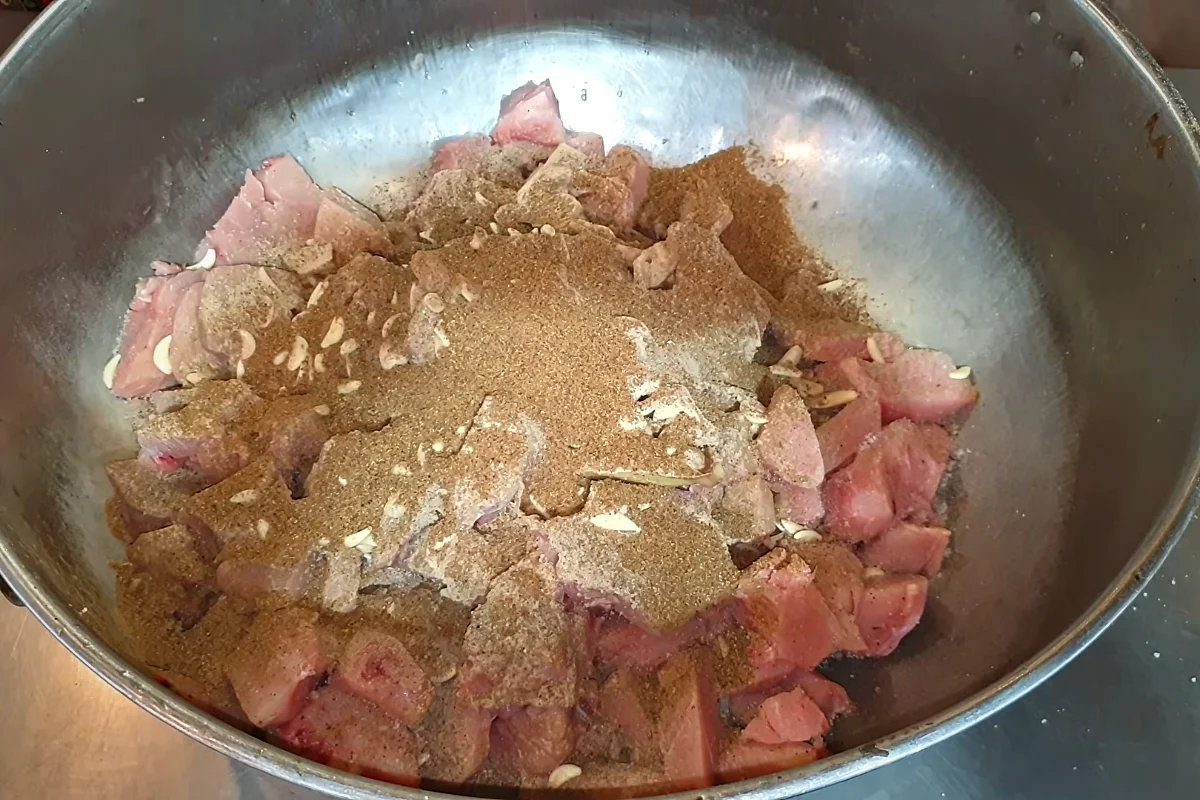
3. Add the yellow spice, green chillies and onion
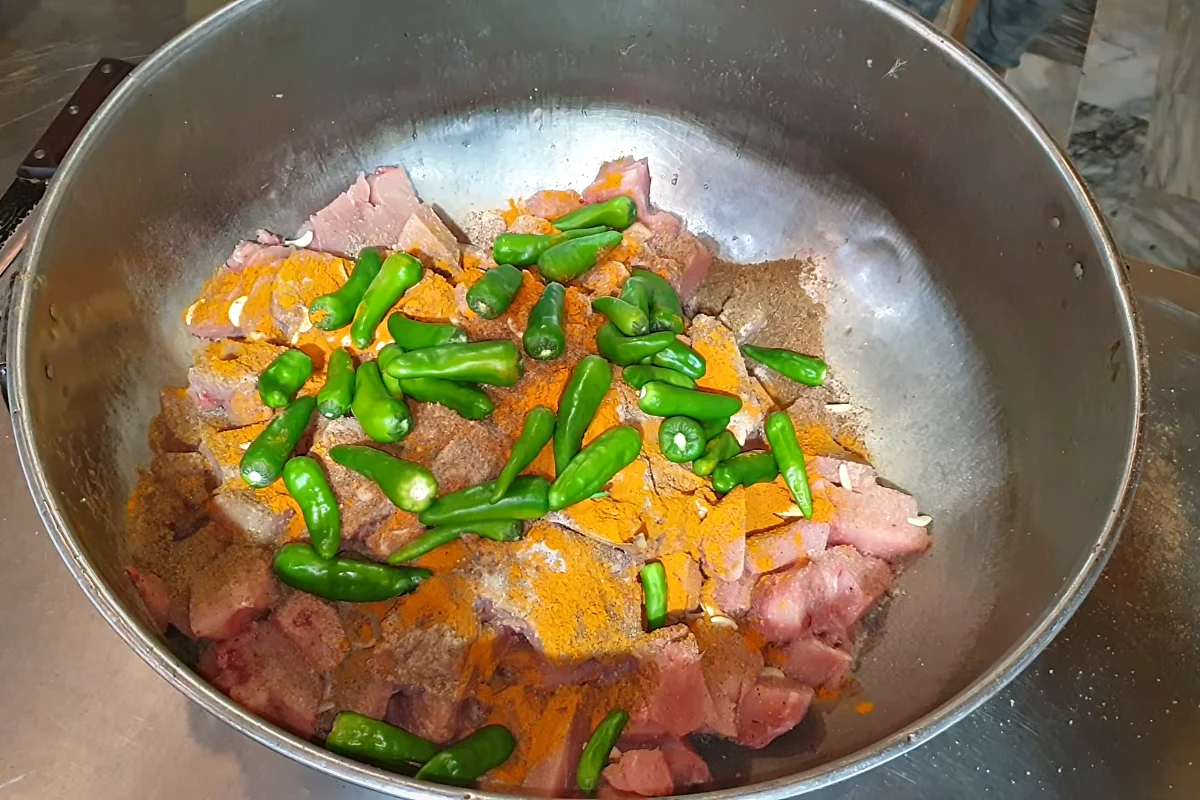
Add the turmeric, whole green chillies and chopped onion.
4. Add the fat, mix and mince
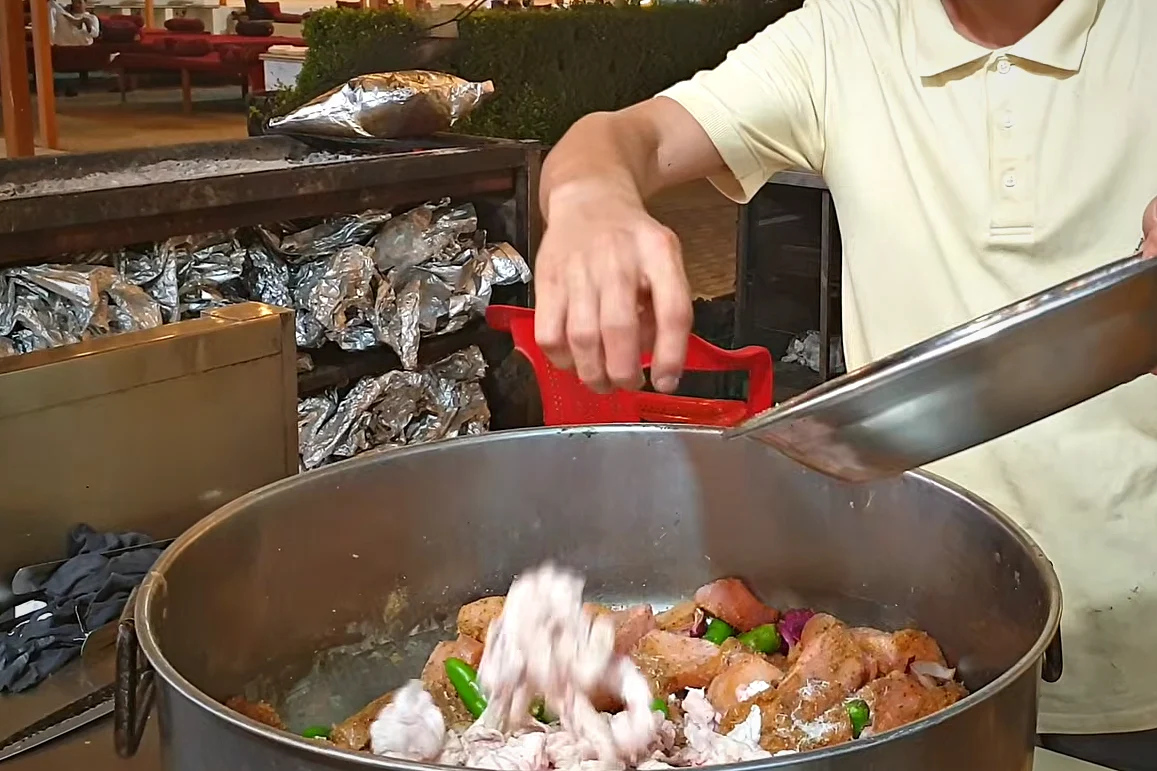
Add the chicken fat or cold butter and mix everything by hand. Then mince it all together until fine: a meat mincer twice, or a food processor in short bursts. Chill the mixture for 30 minutes.
5. Shape on skewers
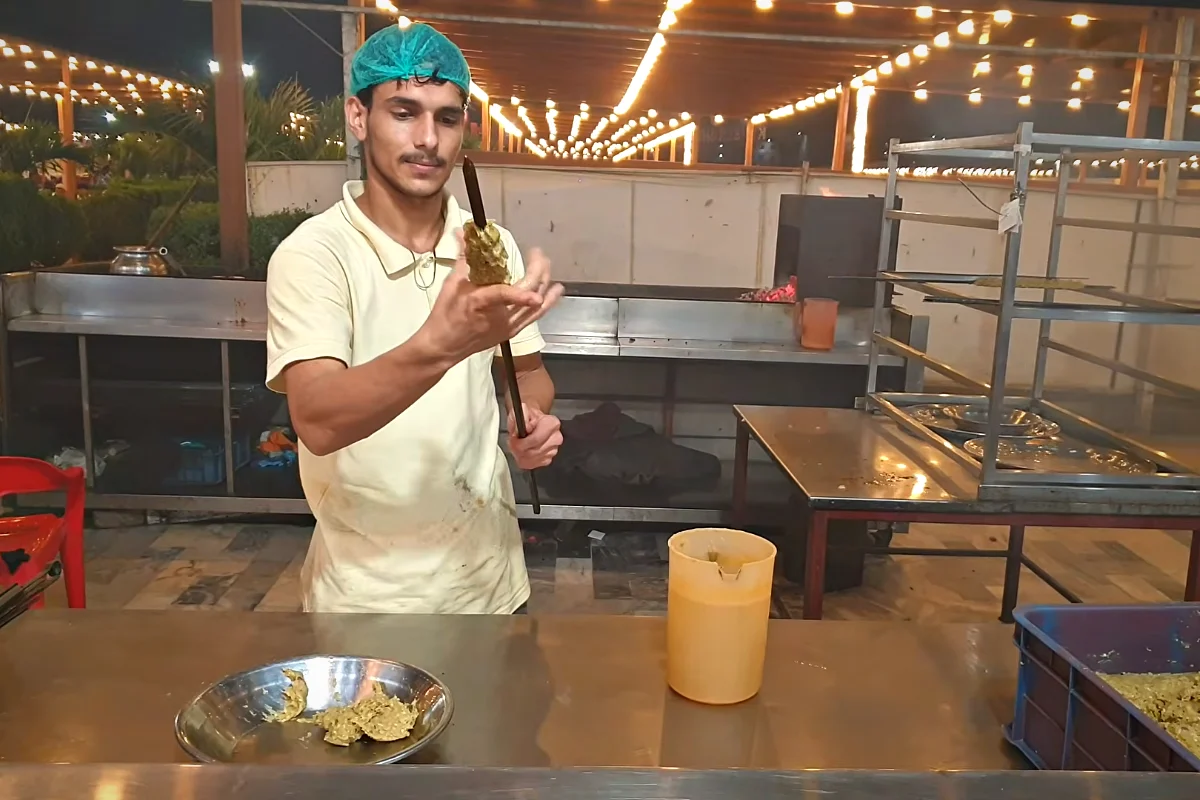
Rub a little oil or ghee on your hands. Take a ball of the mixture, wrap it around a flat skewer and squeeze it down into a long, even kabab. Pinch a spiral pattern along it with your fingers.
6. Grill over hot coals
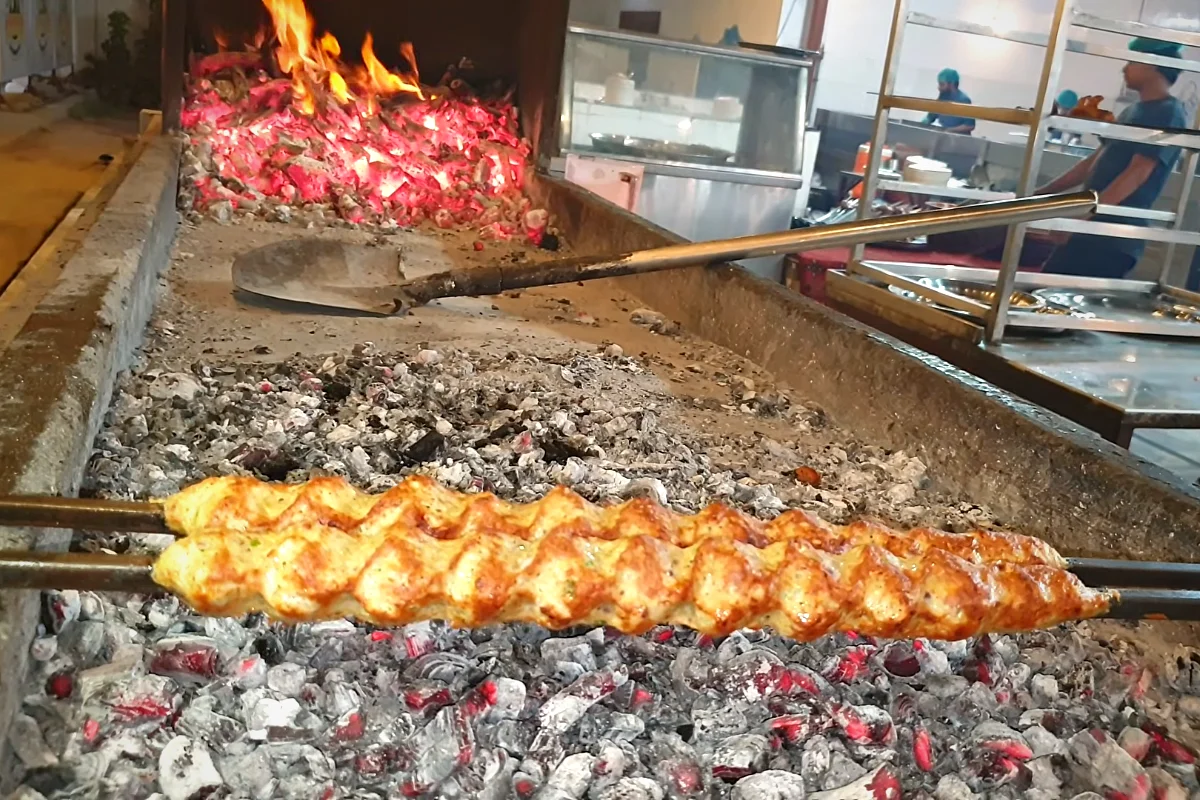
Grill over glowing coals for 8 to 10 minutes, turning often, until the kabab is golden and firm. Brush with a little oil or ghee in the last minute and slide it off onto a plate.
The Complete Chicken Reshmi Kabab Recipe
Chicken Reshmi Kabab (BBQ)
Ingredients
Method
- Cube the chicken and put it in a large bowl.
- Add the garlic, ginger, black pepper, white pepper, cumin, salt, turmeric, green chillies and onion.
- Add the chicken fat or cold butter and mix by hand.
- Mince everything together until fine, twice through a mincer or in a food processor. Chill for 30 minutes.
- Oil your hands, wrap a ball of mixture around a flat skewer and press it into a long, even kabab. Pinch a spiral pattern along it.
- Grill over glowing coals for 8 to 10 minutes, turning often.
- Brush with oil or ghee and serve hot with chutney and naan.
Video
Notes
Reshmi Kabab Problems and How to Fix Them
- The kabab slides off the skewer: the mixture is too wet or too warm. Squeeze the onion, chill the mixture and use flat skewers.
- The kabab is dry: too little fat or too long on the grill. Add the fat and take it off as soon as it is firm.
- The texture is coarse: mince it longer, or twice, until it looks like a smooth paste.
- Burnt outside, raw inside: the coals are flaming. Grill over glowing coals and keep turning.
Home Methods Without a BBQ Grill
- Oven: shape on skewers or as logs, place on a rack over a tray and grill (broil) on high for 12 to 15 minutes, turning once. Brush with ghee and give coal smoke for 5 minutes.
- Pan: shape into short logs without skewers and cook in a heavy pan with a little oil on medium heat, turning gently.
- Creamy version: for a richer kabab, add 2 tbsp cream per kg. It is not in the video, but it is a common home addition.
Serving and Storing Reshmi Kabab

Serve hot with mint chutney, sliced onion, lemon and naan or paratha. Raw shaped kababs can be frozen on a tray, then packed in bags for up to 1 month. Grill them from frozen, a few minutes longer. Cooked kababs keep for 2 days in the fridge.
Chicken Reshmi Kabab FAQs
What does reshmi mean in reshmi kabab?
Reshmi means silky. The kabab is named for its smooth, soft texture.
Is reshmi kabab made with cream?
Many home recipes add cream, but this restaurant version does not. Fat and fine mincing give the softness.
Why do my reshmi kababs fall off the skewer?
Usually the mixture is too wet or not cold enough. Squeeze the onion, chill the mix for 30 minutes and wet your hands with oil, not water.
Can I make reshmi kabab without a mincer?
Yes. A food processor works. Pulse in short bursts so the chicken does not heat up.
What is the difference between reshmi kabab and seekh kabab?
Seekh kabab usually uses beef or mutton mince with more spices. Reshmi kabab uses chicken and fewer, milder spices for a paler, softer kabab.
More BBQ Kabab Recipes
- Beef Bihari Kabab: also filmed at Khyber Shinwari Restaurant.
- Sulemani Mutton Karahi: another Khyber Shinwari recipe.
- Beef Bihari Boti: a spicy BBQ boti for Bakra Eid.

One Comment