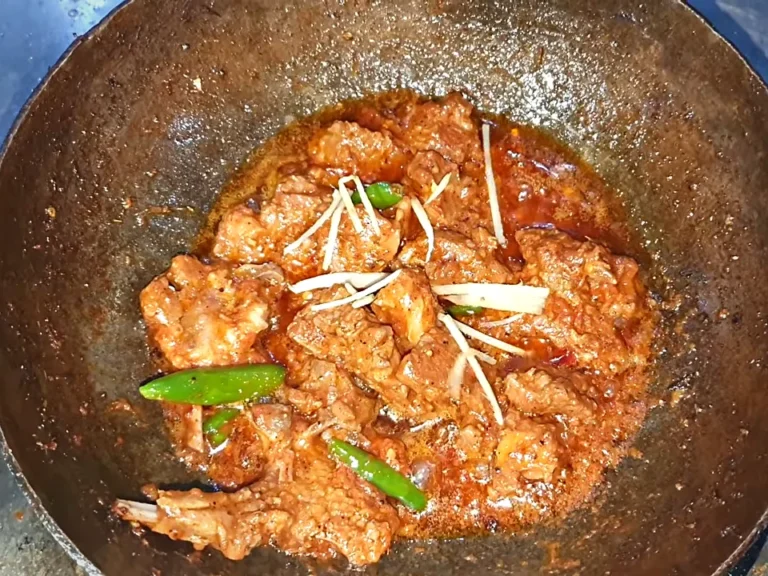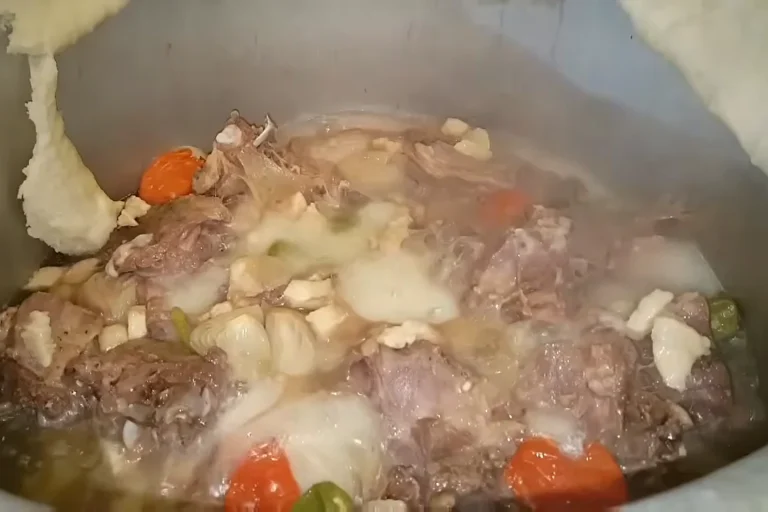
Sulemani Mutton Karahi Recipe (Khyber Shinwari Restaurant, Karachi)

Sulemani mutton karahi is a white, peppery karahi: no tomatoes, no red chilli and no onion. The mutton is simmered in oil and water until soft, then fried hard with ginger and two kinds of green chilli and finished with a big spoon of crushed black pepper. We filmed it at Khyber Shinwari Restaurant on the Super Highway in Karachi, and the cook explains each step for a 2 kg karahi.
Serves: 4–5 people (1 kg mutton) | Prep: 10 min | Cook: about 1 hour 20 minutes
Difficulty: Easy | Best for: Bakra Eid, winter dinners, highway-style karahi nights
Heat level: Hot, from black pepper and small green chillies
Watch the Sulemani Mutton Karahi Video
The full video plays inside the recipe card below. To jump straight to one step, open it on YouTube:
What Makes Sulemani Karahi Different
No tomato, no red chilli. Most karahis are red. Sulemani karahi stays pale, and all the heat comes from black pepper and green chillies.
Boiled first, fried second. The mutton is covered with hot water and cooked for an hour until tender. Then the flame goes high until the water is gone and only oil is left, and the meat fries in it.
Two kinds of green chilli. Small green chillies go in first for heat. Medium ones go in later for their fresh taste, since they are much milder.
Black pepper at the end. The “special masala” the cook saves for last is simply 2 tbsp of crushed black pepper, added after the extra oil is taken out.
Ingredient Notes
- Mutton: bone-in karahi cut from a young goat cooks fastest. Older mutton may need more water and time.
- Black pepper: crush whole peppercorns just before cooking. Ready-ground pepper is much weaker.
- Green chillies: if you cannot find small hot ones, use fewer regular green chillies and slit them.
- Ginger: use a lot. Cut it into thin matchsticks so it softens in the oil.
Sulemani Mutton Karahi Ingredients for 1 kg and 2 kg
| Ingredient | 1 kg muttonserves 4–5 | 2 kg muttonserves 8–10 (video) |
|---|---|---|
| Mutton | ||
| Mutton, bone-in karahi cut | 1 kg | 2 kg |
| Cooking oil | 1 cup | about 2 cups |
| Hot water | 1½–2 glasses (just above the meat) | 3–4 glasses (just above the meat) |
| Salt* | about 1½ tsp | about 1 tbsp |
| Flavour | ||
| Ginger, julienne | 2–3 tbsp | a generous handful (about ⅓ cup) |
| Small green chillies (hot) | 5–6 | 10–12 |
| Medium green chillies (mild) | 2 | 3–4 |
| Black pepper, crushed | 1 tbsp | 2 tbsp |
| To finish | ||
| Julienne ginger and fresh coriander | a little | a handful |
The 2 kg column is what the cook says in the video. We halved it for 1 kg. *Salt is not mentioned in the video, so the salt amount is our suggestion: add it with the water and taste before the chillies go in.
Step-by-Step: How Sulemani Mutton Karahi Is Made
1. Mutton, oil and hot water
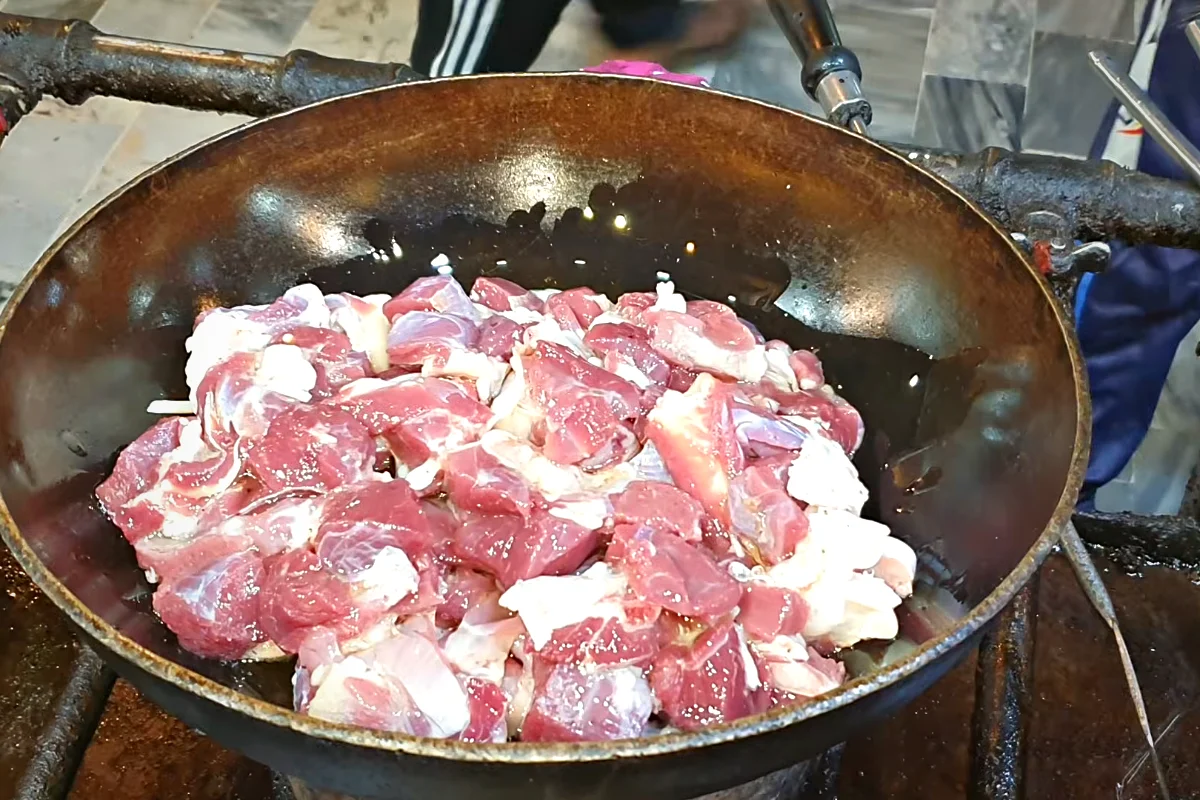
Put the mutton in a karahi with the oil. Add hot water until it sits just above the meat, and the salt.
2. Cover and cook for 1 hour
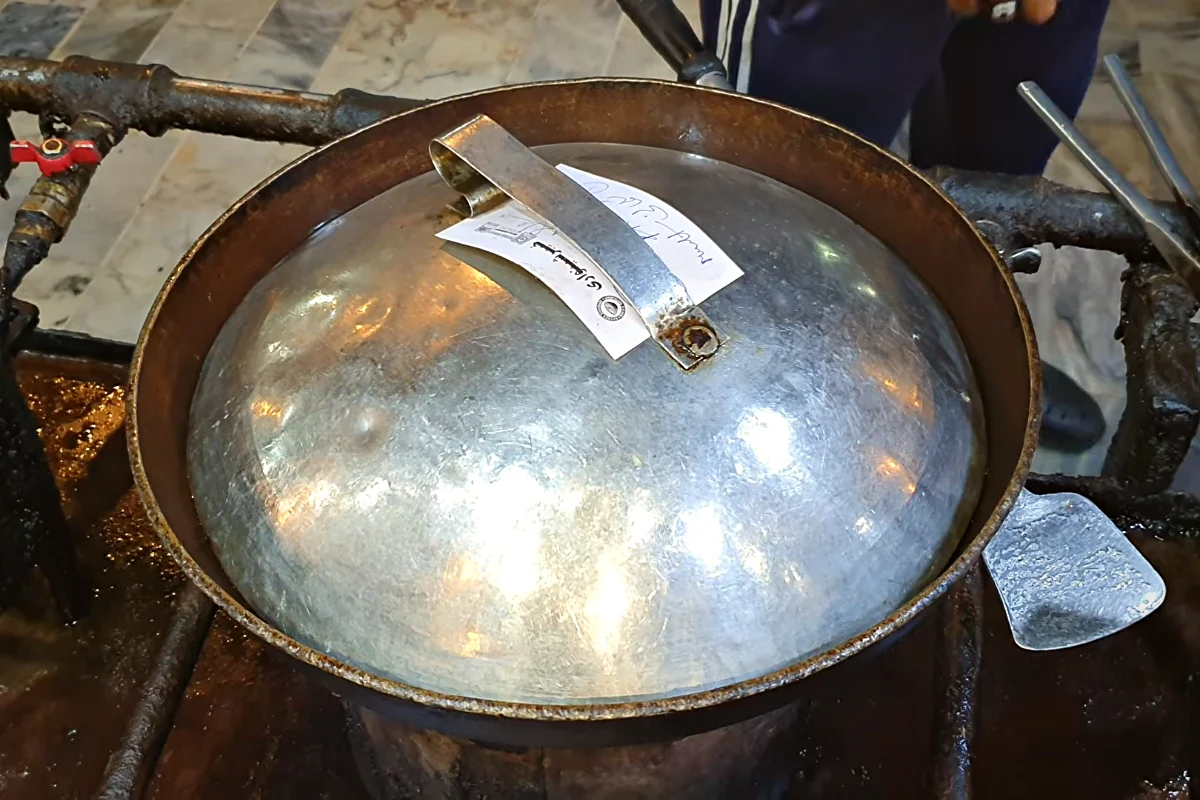
Cover and cook on low to medium flame for about 1 hour. Check a piece: if it is not tender yet, add a little more hot water and keep cooking.

3. Add ginger and dry out the water
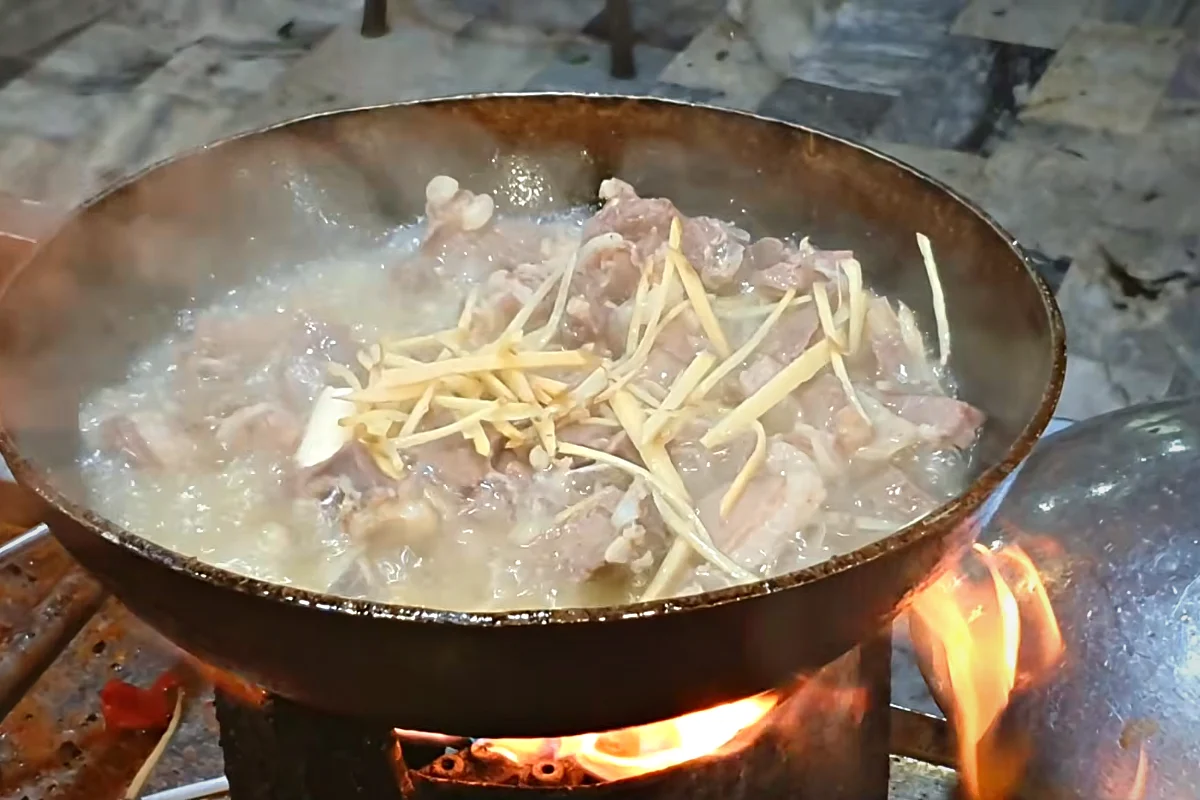
Add the julienne ginger and turn the flame high. Cook for 4 to 5 minutes, stirring, until the water evaporates and only the oil is left.
4. Fry with small green chillies
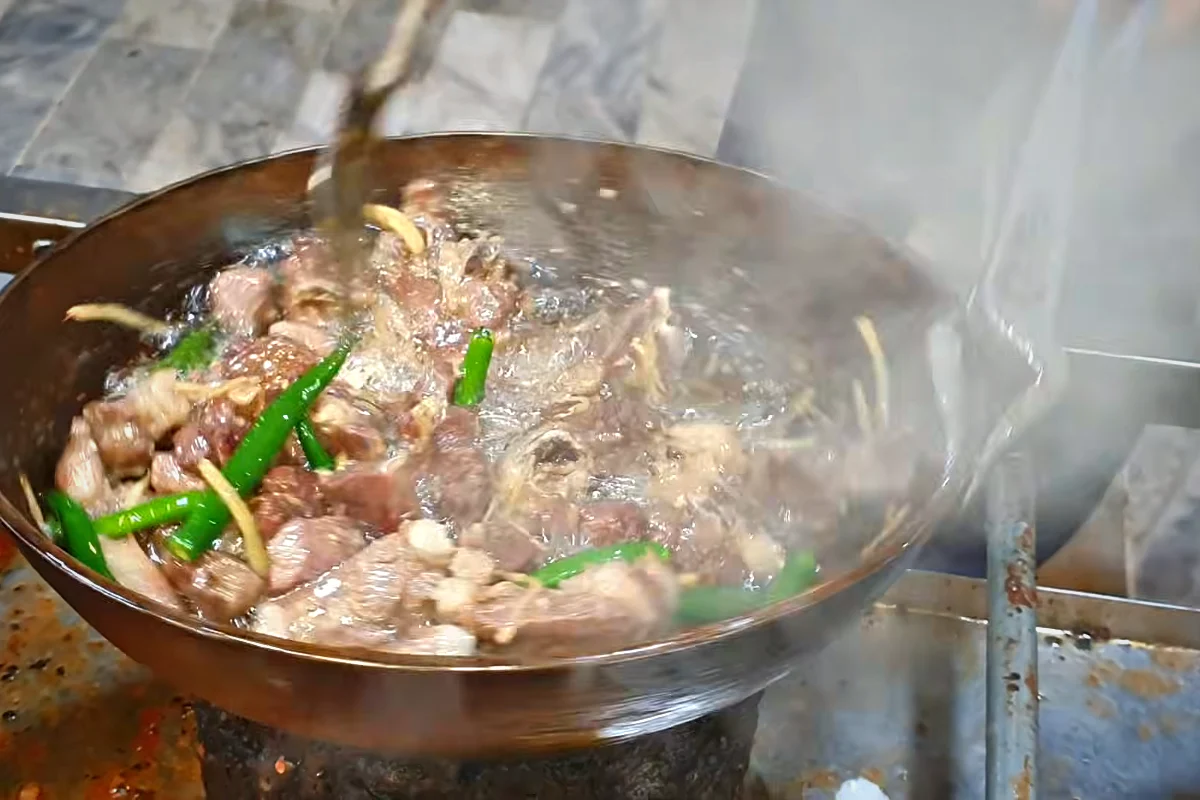
Add the small green chillies and fry for 3 to 4 minutes so their heat goes into the mutton.
5. Add the medium green chillies
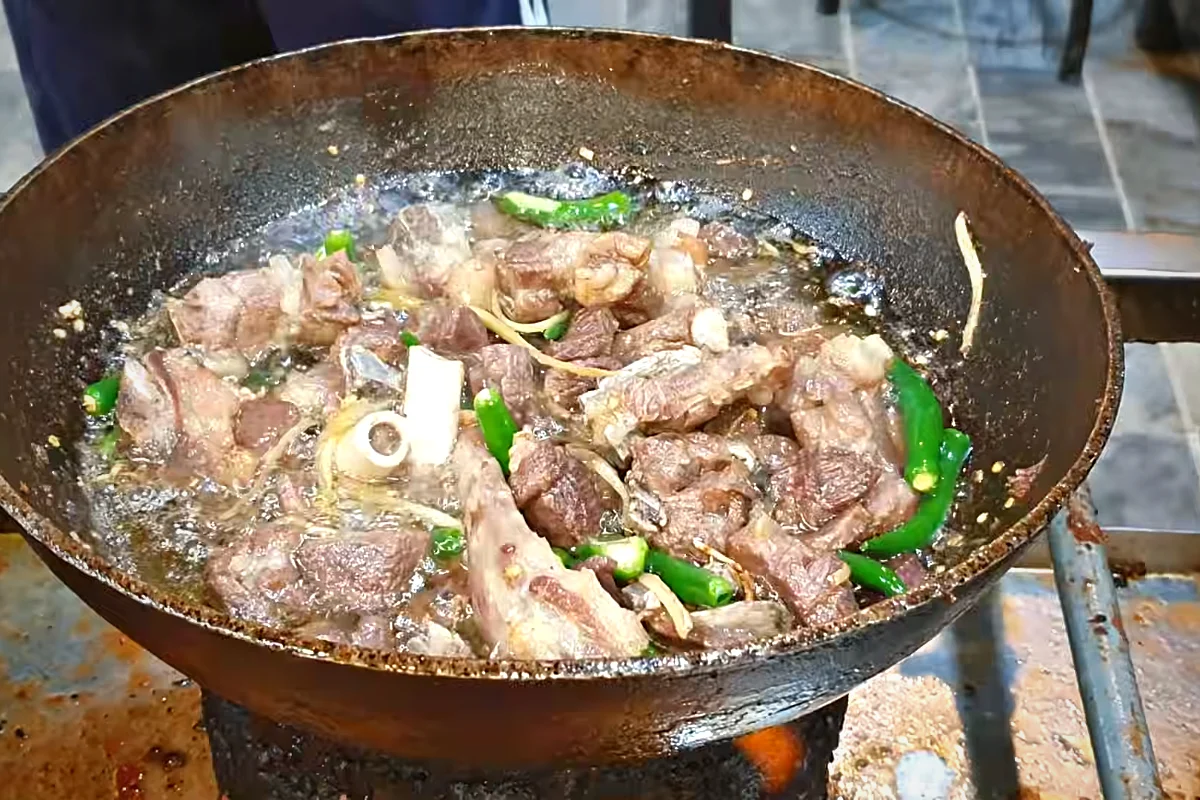
Add the medium green chillies and fry for another 2 to 3 minutes.
6. Remove extra oil and add black pepper
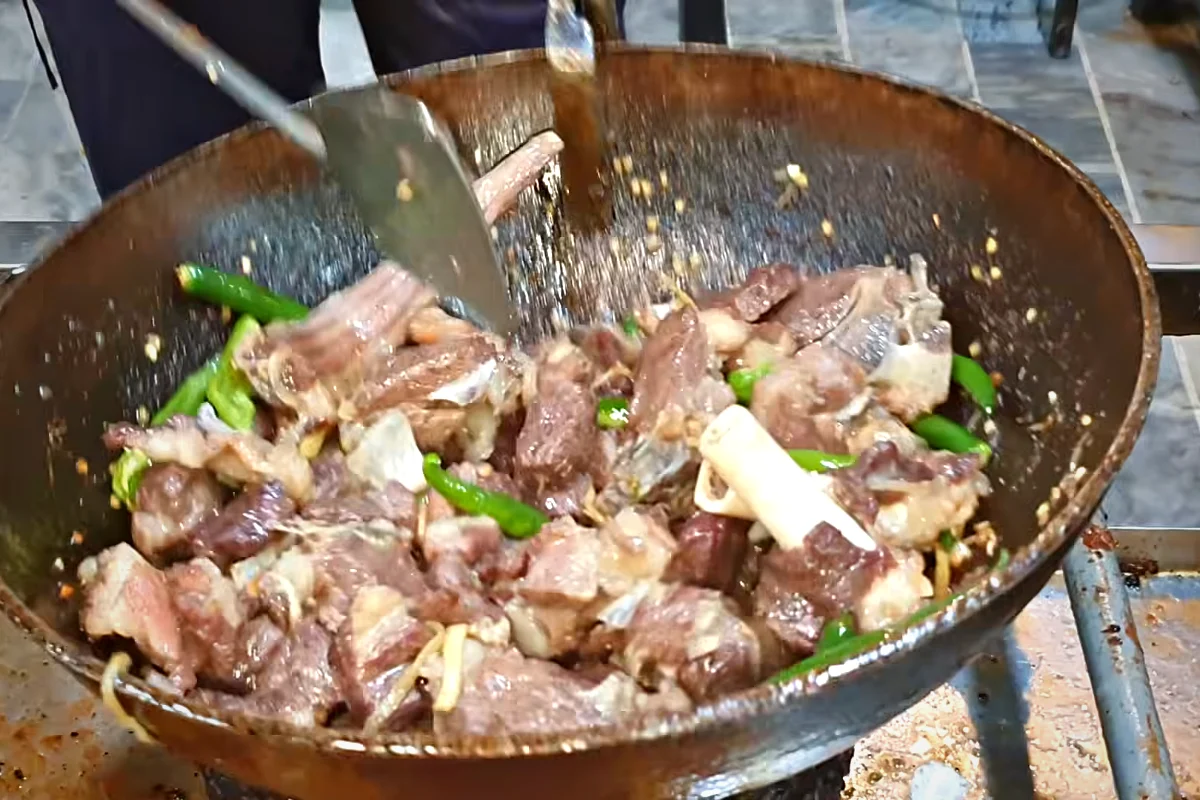
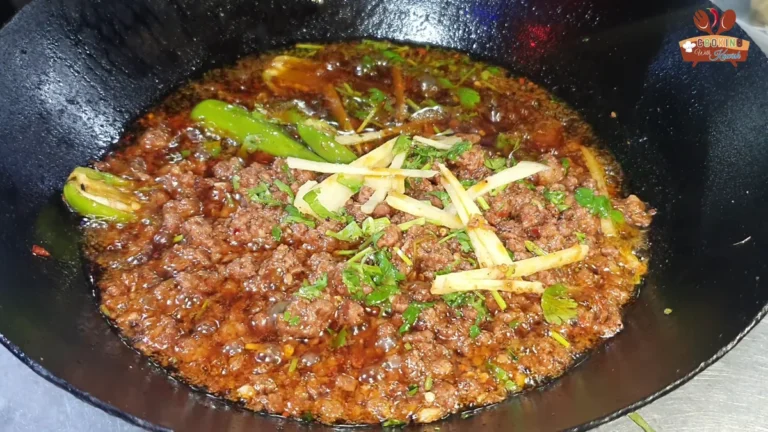
Tilt the karahi and spoon out the extra oil. After a minute or two, add the crushed black pepper and mix well.
7. Finish with ginger and coriander
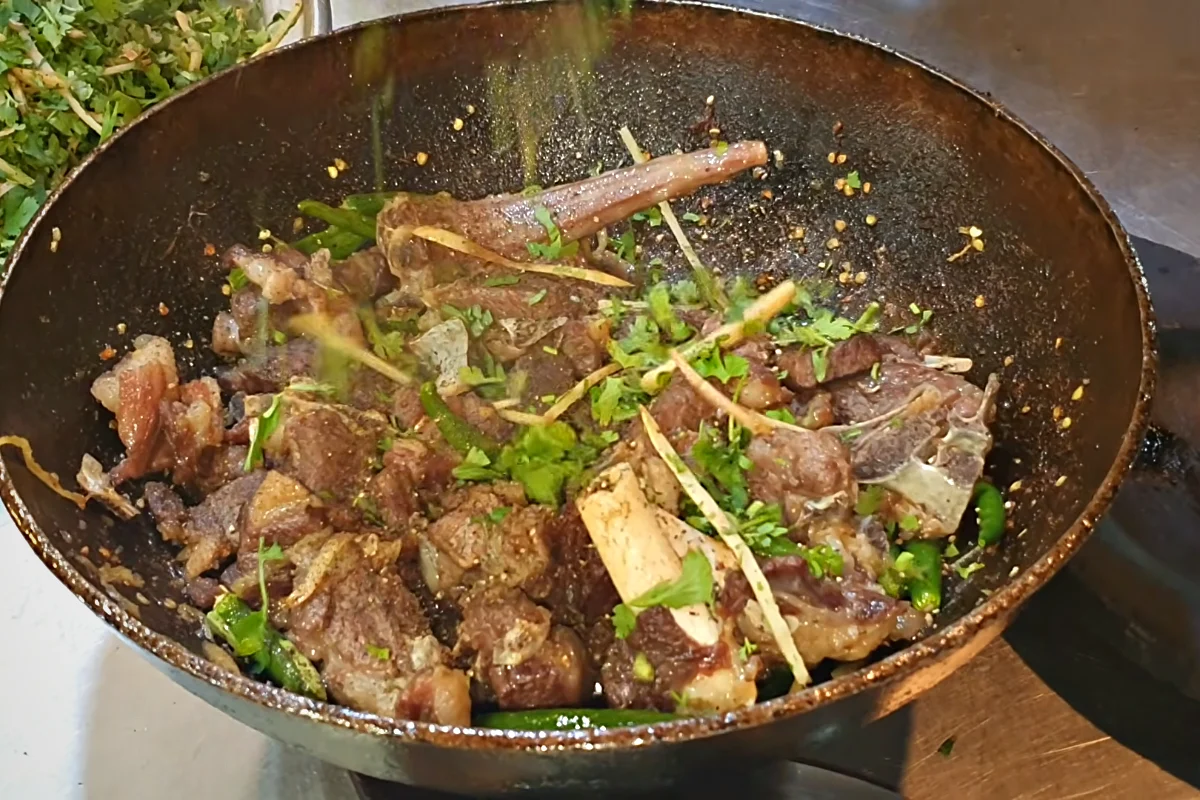
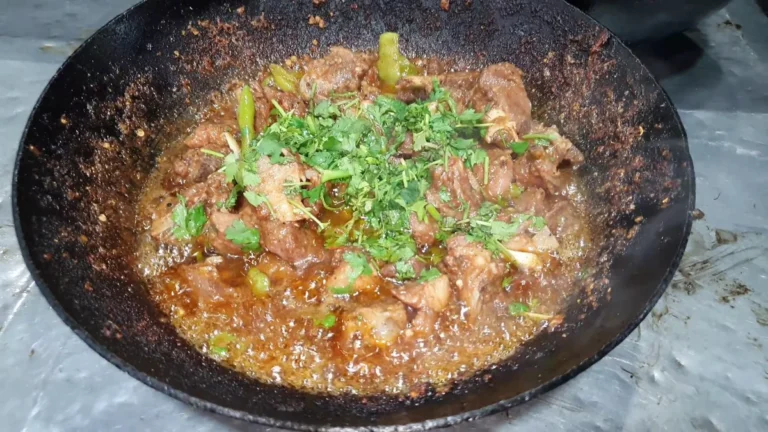
Scatter more julienne ginger and fresh coriander on top and serve straight from the karahi.
The Complete Sulemani Mutton Karahi Recipe
Sulemani Mutton Karahi (Khyber Shinwari)
Ingredients
Method
- Put the mutton, oil, salt and hot water in a karahi. Cover and cook on low to medium flame for about 1 hour, until tender.
- Add the julienne ginger and cook on high flame for 4 to 5 minutes until the water dries and only oil is left.
- Add the small green chillies and fry for 3 to 4 minutes.
- Add the medium green chillies and fry for 2 to 3 minutes.
- Spoon out the extra oil. After 1 to 2 minutes, add the crushed black pepper and mix.
- Finish with ginger and coriander and serve hot with naan.
Video
Notes
Sulemani Karahi Problems and How to Fix Them
- The mutton is tough: it went to the frying stage too soon. Keep it covered with hot water until a piece breaks easily.
- Too oily: the extra oil was not removed. Spoon it out before adding the black pepper.
- Not spicy enough: use freshly crushed pepper and the small, hot green chillies.
Serving Sulemani Mutton Karahi

Serve hot with naan or tandoori roti, sliced onion and lemon. Leftovers keep for 2 days in the fridge; reheat on a medium flame with a splash of water.
Sulemani Mutton Karahi FAQs
What is sulemani karahi?
A white mutton karahi from Pashtun highway restaurants, cooked with oil, ginger, green chillies and black pepper, without tomatoes or red chilli.
What is the special masala in sulemani karahi?
In this video it is crushed black pepper, 2 tbsp for 2 kg mutton, added near the end.
How long does the mutton cook?
About 1 hour covered with hot water, then 10 to 15 minutes on high flame with ginger and chillies.
Can I make it with beef or chicken?
With beef, cook it longer in the water until tender. With chicken, use less water and about 20 minutes before frying.
Where is Khyber Shinwari Restaurant?
The cook says it is on the Main Super Highway in Karachi, on the left just before Jamali Pul when you come from Sohrab Goth.
More Recipes from Khyber Shinwari
- Beef Bihari Kabab: thin beef strips grilled over coal.
- Chicken Reshmi Kabab: soft chicken seekh kabab, no cream.
- Mutton Rosh: namkeen mutton from Gul Shinwari.
- Cholistani Chicken Karahi: a red, tomato-based street karahi.