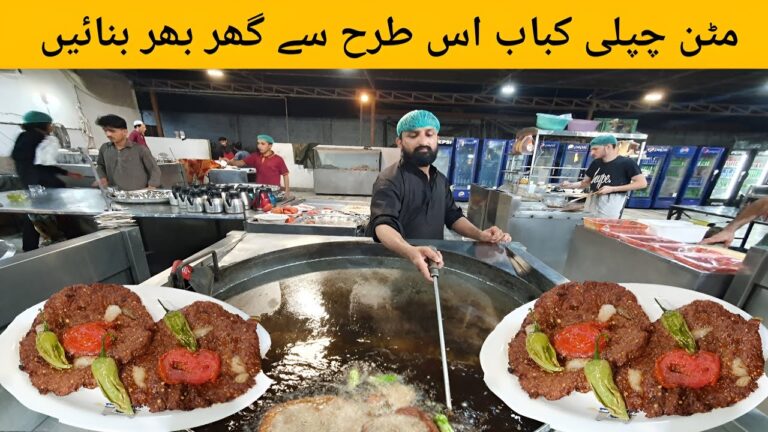
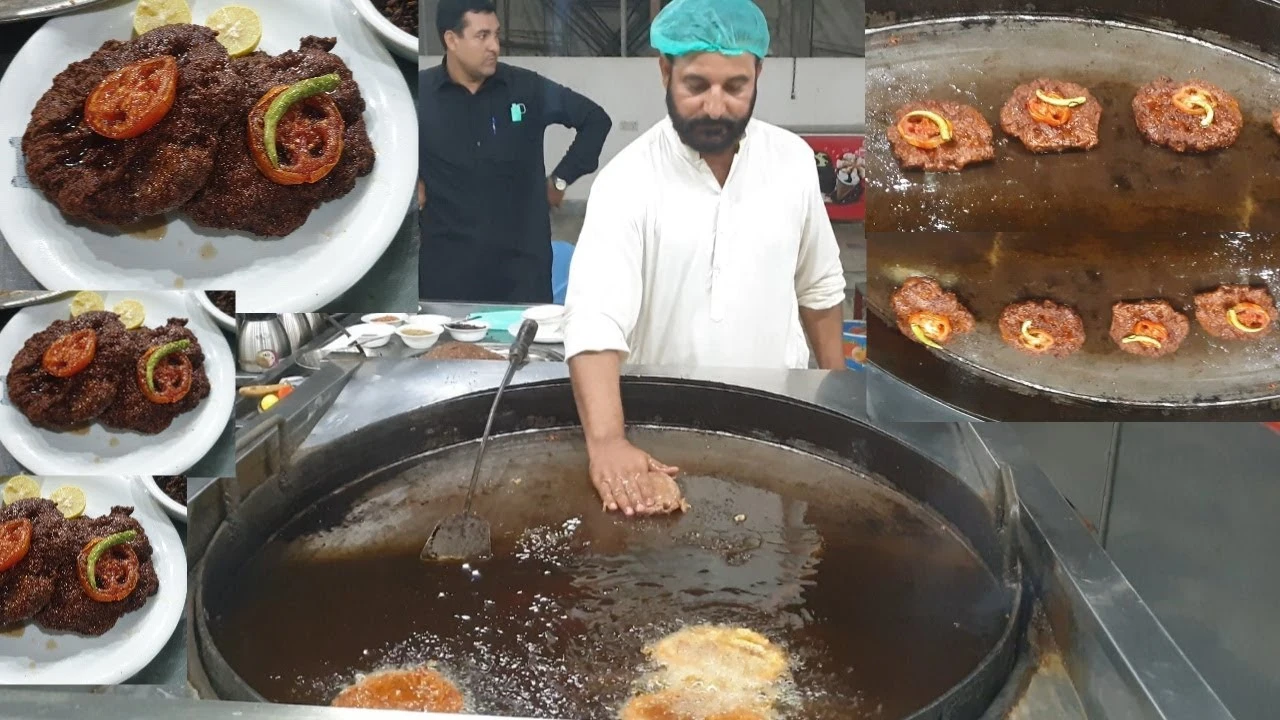
When Bakra Eid comes around, most home recipes stop being useful. You’re not making 6 kababs for a family dinner — you’re feeding 30, 40, sometimes 50 relatives coming over across two or three days. This 5 kg deg-style Bakra Eid chapli kabab recipe is built for exactly that.
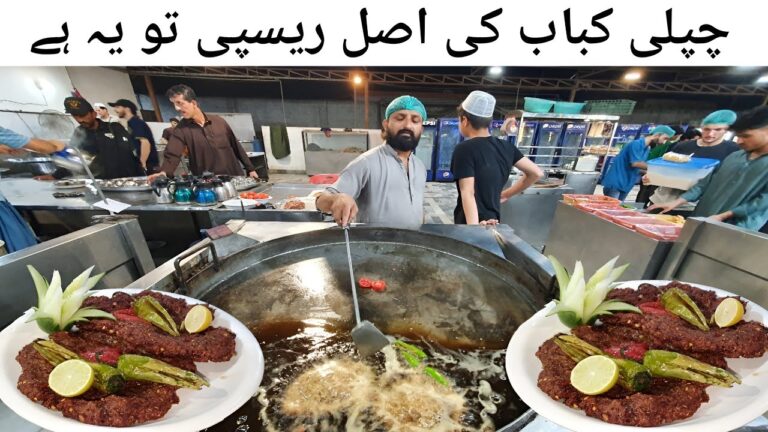
The recipe comes from Khyber Shinwari’s Superhighway branch, where the kabab tawa runs continuously through the night during Eid week. What separates this from a home recipe isn’t just the scale — it’s the technique. A serious 15-minute knead to build natural stickiness, ice-cold mixing to stop the beef fat from melting too early, and precise ratios that only make sense at commercial quantity. If you cut this recipe down to 1 kg, some of it stops working. That’s why we’ve kept it exactly as it’s made at the restaurant.
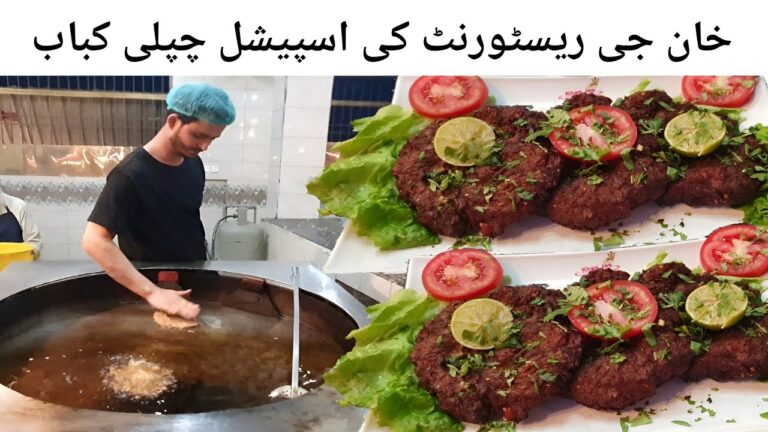
For smaller batches, we have four other versions ready — the Khyber Shinwari 2 kg pillar, the A-One 1 kg home version, the Khan Jee 750g beef, and the 500g mutton. But if you’re planning a full Bakra Eid dawat, this 5 kg deg recipe is the one.
📍 Where to Eat the Original in Karachi
Restaurant: Khyber Shinwari Restaurant (Superhighway Branch)
Address: Superhighway, near Sohrab Goth, Karachi (second branch in Block I, North Nazimabad)
Speciality: Peshawari Chapli Kabab (5-10 kg batches every night), Shinwari Karahi, BBQ
Best Time: Bakra Eid week — fresh 10 kg batches every hour from evening till 2 AM
Location: Open in Google Maps
Making Bakra Eid dawat at home? The 5 kg deg recipe below is the exact commercial version.
Watch the complete recipe above before you start cooking.
What Makes This 5 Kg Bakra Eid Chapli Kabab Different
Deg-scale batch — 5 kg mince: This isn’t a home recipe scaled up; it’s the exact commercial ratio used at the restaurant. Makes 40-50 kababs — enough for a proper Bakra Eid dawat of 30-40 guests with roti and salad. Halving this recipe doesn’t work the same way because the kneading dynamics change at smaller scale.
Ice-cold kneading technique: During hot months (which is when Bakra Eid usually falls), keep the mince over a bowl of ice while kneading. Warm mutton fat melts too quickly and makes the mixture greasy. Cold kneading keeps the fat solid and gives you kababs that hold shape without falling apart.
Only 15 minutes of kneading (thanks to ice-cold trick): Traditional 2 kg batches need 25-30 minutes of hand mixing. This 5 kg batch needs only 15 minutes because the ice-cold technique makes the meat proteins bind faster. The natural stickiness (chipak) develops quickly when the fat stays firm.
250g maize flour — precisely measured: For 5 kg mince, exactly 250g of makai ka atta (maize flour). Not more, not less. This is 5% of the meat weight — anything above and the kababs turn bready, anything below and they fall apart at this scale. This exact ratio is critical for a batch this size.
Ghee frying, not oil or animal fat: Unlike the Sohrab Goth style that uses pure animal fat, Khyber Shinwari fries in pure ghee. The ghee lets the beef fat inside the kabab render slowly, so you get juicy centres with dark-crispy edges. For 5 kg mince, you need a wide flat tawa and about 1.5 kg of ghee.
The Complete 5 Kg Bakra Eid Chapli Kabab Recipe
Note: This is Khyber Shinwari’s 5 kg commercial deg-style version — designed for Bakra Eid dawat of 30-40 people (yields 40-50 kababs). This is not a scaled-up home recipe; the technique specifically works at this quantity. For smaller batches, please use our other recipes: 2 kg pillar, 1 kg A-One, 750g Khan Jee beef, or 500g mutton.
Tips Before You Start
Book your butcher a day in advance: 5 kg of coarse mince (2-number keema) with 20% fat isn’t something most butchers keep ready. Order it a day before and specify: “chapli kabab ke liye 5 kg motta qeema, 20% charbi ke saath, aur alag se 500g charbi frying ke liye”.
Prepare a large ice bath before starting: Place your mixing vessel inside a bigger tray filled with ice cubes. This keeps the mince cold throughout the 15-minute knead — essential during Bakra Eid summer heat.
Squeeze onion paste bone-dry: For 2 kg onions ground to paste, you’ll extract about 800ml of water. Discard that water. Only use the dry onion paste — this is non-negotiable for kababs that hold shape at this scale.
Have 1.5 kg ghee ready in advance: Frying 50 kababs continuously needs a lot of ghee. Keep it in a separate pot on low heat so you can top up your tawa without waiting. Ghee that goes below a certain temperature gives greasy, uncooked-looking kababs.
Set up an assembly line if possible: One person shapes, one fries, one drains on paper. At the restaurant it’s a 3-person job. At home, get family members involved — one person can’t keep up with a 5 kg batch alone.
Storage and Serving
For Bakra Eid, cook fresh in batches — don’t try to fry everything and reheat. Uncooked shaped kababs freeze well for up to 2-3 months on a parchment-lined tray. Fry directly from frozen (add a minute per side). Cooked leftover kababs keep 3 days in the fridge; reheat gently on a tawa with a drop of ghee — never the microwave.
Serve straight off the tawa with hot Afghan naan, sliced onions, green chili chutney, and lemon wedges. For a full Bakra Eid spread, pair with our Shinwari Mutton Karahi, Mutton Rosh, or Degi Danedar Beef Korma. End with green tea (kahwah) — the traditional Pashtun way.
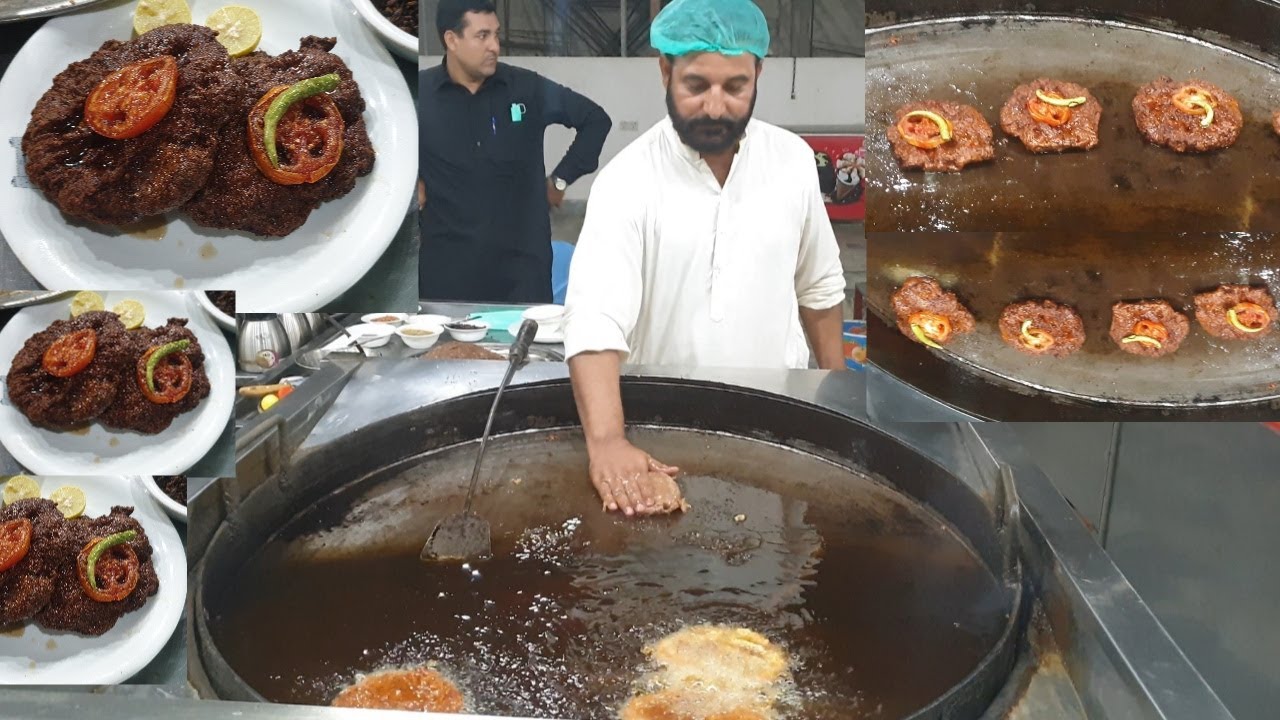
Bakra Eid Chapli Kabab (5 Kg Deg Style)
Ingredients
Method
- Start with the beef mince in a large vessel. Add salt (1 tbsp per kg). Use your hands to vigorously knead and mash the mince for at least 15 minutes. This releases the natural proteins and creates the “stickiness” required to hold the kabab together without breaking.
- Add 250g of maize flour (Makai ka Atta) for a 5kg batch. Note that flour is added primarily for taste and a slight bind, not as a filler. Continue kneading so the flour integrates perfectly with the meat.
- Add the black pepper, cumin, ajwain, coarsely crushed coriander, anardana, and red chili flakes. The coarse texture of the coriander and pomegranate seeds is what provides the authentic Peshawari crunch.
- Grind the onions but ensure you squeeze them through a cloth or by hand to remove every drop of water. Dry onions are vital for firm kababs. Similarly, hand-cut most of the tomatoes into small cubes, blending only 2-3 for moisture.
- Fold the dry onion paste, tomatoes, and ground green chilies into the meat mixture. Give it one final thorough mix by hand, ensuring all spices and vegetables are evenly distributed.
- Heat ghee in a large flat tawa. Take a large portion of the mixture, flatten it with your palms into a wide, thin disc. The authentic Chapli Kabab is larger than the palm of your hand and quite thin to allow for even crisping.
- Place the kababs carefully into the hot ghee. Fry on medium heat until the edges are dark brown and crispy. The ghee allows the beef fat to render beautifully, resulting in a juicy, flavorful kabab.
- Serve immediately with hot Afghan naan, sliced onions, mint chutney, and lemon wedges. For Bakra Eid dawat, keep frying in fresh batches — don't fry everything ahead of time.
Video
Notes
Frequently Asked Questions
Can I really not scale this down to 1 kg?
You can, but the technique changes. The ice-cold kneading, exact maize flour ratio (250g for 5kg), and 15-minute knead all work together at commercial scale. At 1 kg the ratios still hold mathematically but the kneading dynamics are different — you’ll need longer mixing time. For 1 kg batches, our A-One 1 Kg recipe is designed specifically for that quantity.
How many people will 5 kg mince feed on Bakra Eid?
Roughly 30-40 adults if chapli kabab is one of several dishes on the table (which is usually the case at Eid). If it’s the main dish and served with just roti and salad, count on 20-25 servings. Plan 2-3 medium kababs per adult, 1 per child. This recipe yields 40-50 kababs.
Do I really need ice-cold kneading? What if the weather is cool?
In Karachi’s Bakra Eid heat (usually 30°C+), yes — the ice technique is essential because beef fat starts melting around 30°C. If you’re cooking in cool weather (below 22°C), you can skip the ice bath, but the kababs will still turn out better with cold hands and a chilled mixing vessel.
What if my butcher doesn’t do “2-number keema” (coarse mince)?
Ask specifically for chapli kabab ke liye motta qeema, sirf ek baar machine se (coarse chapli kabab mince, run through machine only once). Most butchers understand this. If they only do fine mince, ask them to pass the meat through the coarse plate — some machines can be adjusted. Do not use blenders or food processors — the texture will be wrong.
Can I use mutton instead of beef for this 5 kg version?
Yes, but mutton fat behaves differently — it melts at a lower temperature than beef fat. If using mutton, keep the ice bath colder and reduce kneading to 10 minutes. Also increase the maize flour slightly (to 300g for 5kg) to compensate for mutton’s softer binding. Or use 60% beef and 40% mutton for the best of both textures.
How long can I keep the raw mixture in the fridge?
For this large a batch, up to 24 hours covered tightly. Any longer and the onion paste starts fermenting. Better strategy: mix, shape all patties, freeze the raw shaped kababs immediately on trays. They keep 2-3 months in the freezer and fry directly from frozen. This is what most restaurants do during Eid week prep.
Join the Cooking with Kawish Community
Instagram: @cooking_with_kawish — Tag us to get featured!
Facebook: Cooking with Kawish
YouTube: Subscribe for new recipes
TikTok: @cookingwithkawish
Happy Cooking!