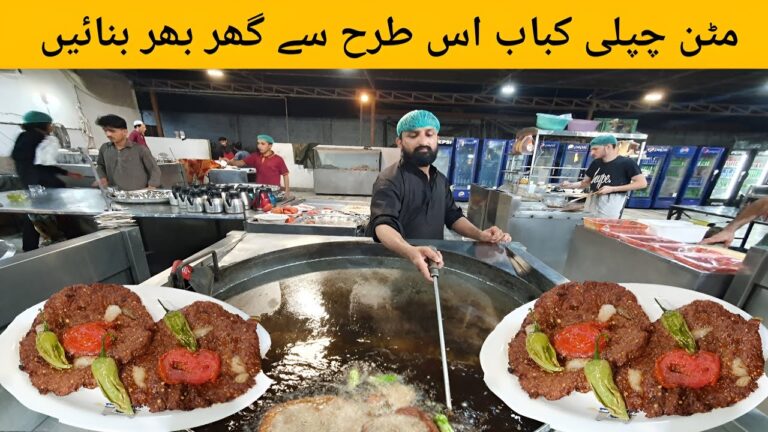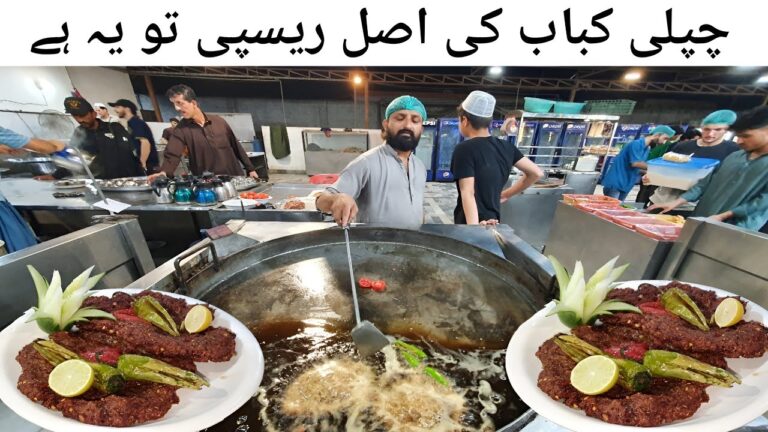
Not every chapli kabab recipe needs a butcher’s coarse grind, an hour of kneading, or specialty spices like anardana. Sometimes you just want a simple chapli kabab recipe using what’s already in your kitchen — a regular pack of mince, standard powdered spices, one onion, one tomato. This is that recipe.
Think of it as the version you’d learn on your first attempt — no fancy ingredients, no long chilling, no special technique. Just a proper mix, a good pan, and 45 minutes of your time. It’s inspired by the kind of chapli kabab you get at Karachi’s honest neighbourhood kabab houses like Noorani Kabab House — no frills, spiced correctly, right thickness, served fresh.
If you eventually want to try the more advanced techniques, we’ve got those covered too. Our Khyber Shinwari 2 kg pillar recipe is the full commercial version, our A-One 1 kg home version uses ajwain and ghee, and our Khan Jee Beef Chapli is the Karachi restaurant-style beef version. But this post is your starting point — the simplest chapli kabab you can make at home tonight.
📍 Where to Try Simple, Honest Chapli Kabab in Karachi
Restaurant: Noorani Kabab House
Style: Working-class Karachi neighbourhood kabab house — kebabs done right, no fusion, no gimmicks
Speciality: Chapli, seekh, shami, and reshmi kababs — properly spiced, right thickness, affordable
Location: Find on Google Maps
Want that same simple, honest taste at home? The recipe below is the easiest way to start.
Watch the complete recipe above before you start cooking.
What Makes This Simple Chapli Kabab Recipe Different
Pantry staples only: No anardana, no maize flour, no ajwain, no beef fat. Just cumin powder, coriander powder, chili powder, garam masala, salt, and pepper. If you cook Pakistani food regularly, you already have everything you need.
No chilling or resting required: Unlike our advanced versions, this recipe goes from mixing bowl to frying pan in one continuous flow. Perfect for weeknights when you don’t have time to plan ahead.
1 kg batch that scales easily: This makes 8–10 kababs — enough for a family of 4–5. Want more? Just double or triple every ingredient. Want less? Halve everything (though 500g is the smallest usable batch).
Powdered spices instead of whole seeds: Advanced recipes crush whole coriander and cumin seeds. This one uses regular ground spices from the jar — you lose a bit of aroma but gain massive convenience. For a first attempt, that’s the right trade-off.
Works with beef OR mutton: Because the technique is simple and forgiving, both meats work well. Use whatever’s fresher at your butcher or already in your freezer.
The Complete Simple Chapli Kabab Recipe
Note: This is the beginner version — designed for people who’ve never made chapli kabab before. Once you’re comfortable with the basics, try our Khyber Shinwari 2 kg commercial version or the A-One 1 kg version with anardana and ajwain for a more authentic Peshawari flavour.
Tips Before You Start
Use fresh mince, not frozen: Fresh mince has better fat distribution and holds together properly. If you must use frozen, thaw it fully in the fridge overnight and pat dry with paper towels before using.
Chop the onion finely — no blending: A blender turns onion into paste and adds too much water. Finely dice the onion by hand, then squeeze out excess moisture in a cloth before adding to the mince.
Ground spices should be fresh from the jar: Old ground spices lose their flavour quickly. If your cumin or coriander powder has been sitting for over a year, buy new ones — this recipe leans on those spices, so freshness matters.
Test one kabab first: Before frying the whole batch, cook one small kabab and taste. Adjust salt and chili to your preference before shaping the rest. This is a beginner-friendly recipe, so don’t be afraid to tweak.
Medium heat, not high: High heat burns the outside before the inside cooks. Medium heat with a shallow layer of oil gives you an evenly browned kabab that’s cooked all the way through.
Storage and Serving
Cooked kababs keep 2 days in the fridge in an airtight container. To reheat, warm gently on a pan with a drop of oil — never the microwave (turns them rubbery). Uncooked shaped patties freeze well for up to 2 months on a parchment-lined tray; fry directly from frozen, adding a minute per side.
Serve hot with fresh naan or roti, sliced onions with lemon, and a bowl of mint raita. For a fuller meal, pair with our Cholistani Chicken Karahi or Green Chicken Karahi. Since this is a simple, casual recipe, it also works beautifully in bun kababs with ketchup and green chutney — a favourite way to eat leftover chapli kabab.
Simple Chapli Kabab (Easy Home Version)
Ingredients
Method
- In a large bowl, combine mince, chopped onion (squeezed dry), tomatoes, green chilies, ginger-garlic paste, and 1 beaten egg. Add all powdered spices (cumin, coriander, chili, garam masala, salt, black pepper). Mix well by hand for 5-7 minutes until sticky.
- Add corn flour and mix for another 2 minutes. The mixture should hold shape when pressed. If it feels too wet, add another tablespoon of corn flour.
- Divide into 8-10 portions. With wet hands, flatten each into a round patty about 1 cm thick.
- Heat oil in a non-stick pan or tawa on medium heat. Fry patties 4-5 minutes per side until golden brown and cooked through. Optional: brush the second egg over hot kababs for shine. Serve hot with naan, sliced onions, and lemon wedges.
Video
Notes
Frequently Asked Questions
I’m making chapli kabab for the first time — is this the right recipe?
Yes, this is exactly the recipe to start with. It uses only common pantry spices, no long chilling, no special butcher cuts, and no fancy techniques. Once you’re comfortable with this basic version, you can try our more authentic recipes like the A-One 1 Kg version with ajwain or the Khyber Shinwari 2 kg commercial version.
Why doesn’t this recipe use anardana (pomegranate seeds)?
Because this is the simplest starter version — anardana is a specialty ingredient many kitchens don’t stock. The kababs will still taste great without it, just less tangy. If you want that traditional Peshawari tang, check our Peshawari-style recipe that uses anardana as the star ingredient.
Can I use ground spices from a jar, or do I need to crush whole seeds?
Ground spices from a jar work perfectly fine for this basic recipe — that’s the whole point of the “simple” approach. Just make sure the spices are fresh (not sitting in your pantry for over a year). For more advanced flavour, our other Peshawari recipes use freshly crushed whole seeds — but you don’t need that for a first try.
My kababs turned out a bit dry — what should I do next time?
Two most likely causes: your mince was too lean (aim for at least 15% fat) or you cooked on high heat which dried out the surface too quickly. Ask your butcher for regular beef or mutton mince with visible fat, and always cook on medium heat with enough oil for shallow frying.
Do I need a specific pan or can I use a regular non-stick?
A regular non-stick pan works perfectly for this recipe. You don’t need a fancy tawa or cast iron. Just make sure the pan is wide enough to fit 2–3 kababs at a time without overcrowding — overcrowding drops the temperature and makes the kababs soggy.
Can I make these ahead for a party?
Yes — shape the raw kababs, place them on a parchment-lined tray, and refrigerate for up to 24 hours before frying. For longer storage, freeze the raw shaped kababs; they’ll keep 2 months in a freezer bag. Fry directly from frozen (add a minute per side). Cooked kababs are best served fresh but reheat well on a pan.
Join the Cooking with Kawish Community
Instagram: @cooking_with_kawish — Tag us to get featured!
Facebook: Cooking with Kawish
YouTube: Subscribe for new recipes
TikTok: @cookingwithkawish
Happy Cooking!