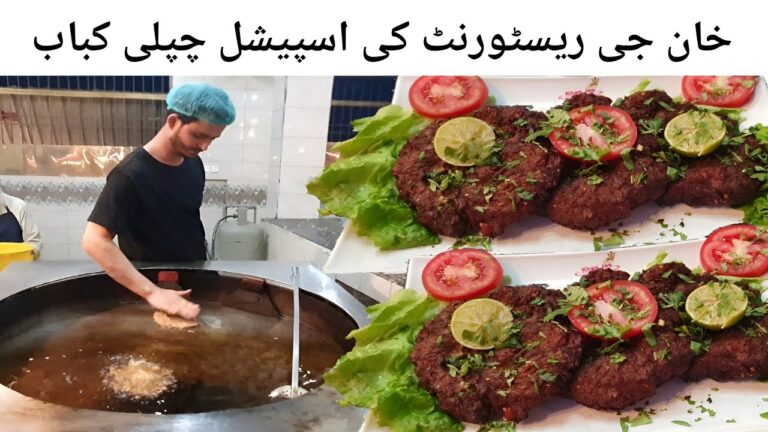
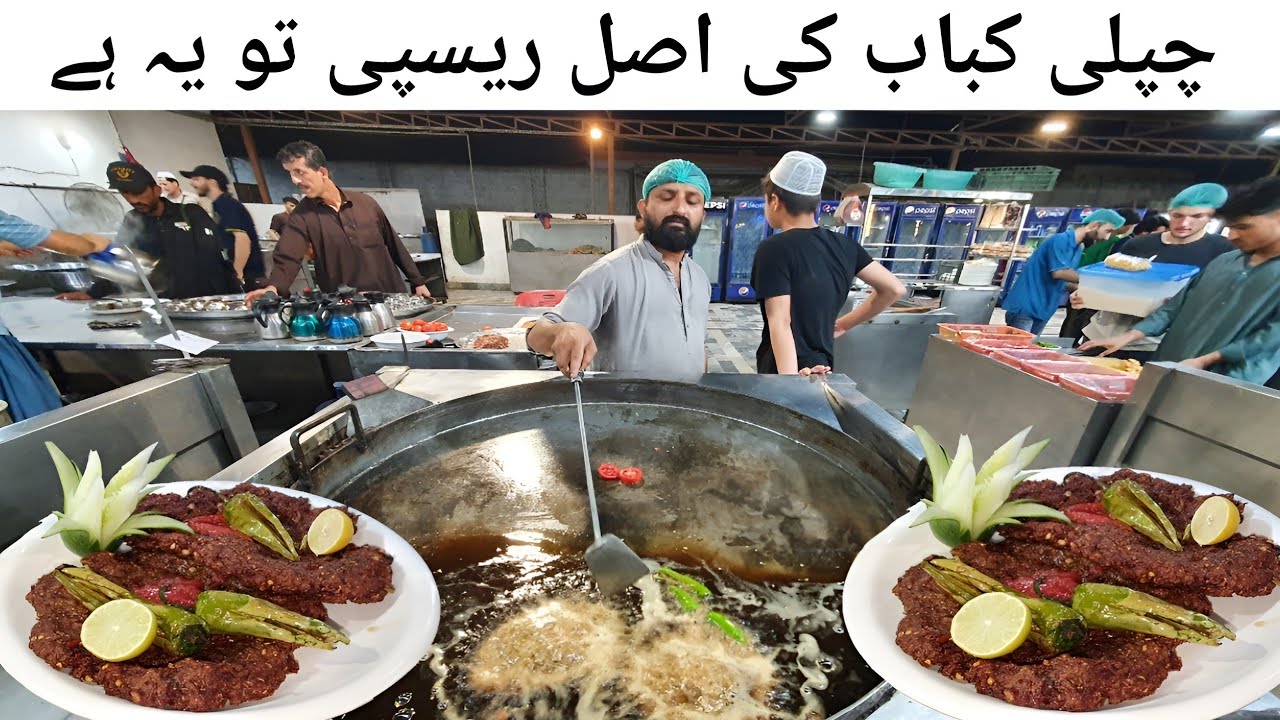
At Khyber Shinwari Restaurant in North Nazimabad, the smell of freshly fried Chapli Kababs hits you before you even reach the door. Their kitchen turns out hundreds of these flat, disc-shaped kababs every night — crisp on the outside, juicy inside, and packed with the signature Peshawari spice blend that has kept people coming back to this North Nazimabad spot for years.
This recipe comes directly from a chef at Khyber Shinwari with 23 years of experience making these kababs commercially. The version below is for 2 kg of beef or mutton mince — enough for a family gathering or Bakra Eid dawat. What makes it work is not any secret ingredient, it’s the technique: the way the mince is kneaded, how long the onions are squeezed, and the order in which spices go in.
If you’ve tried our previous kabab recipes like Shinwari Beef Kabab or Chicken Reshmi Kabab, you already know that restaurant-style results at home come down to method, not shortcuts. Follow this one properly and your chapli kababs will hold their shape, stay juicy, and taste like the ones you eat at Khyber Shinwari.
📍 Where to Eat the Original in Karachi
Restaurant: Khyber Shinwari Bar B.Q Restaurant
Address: Block I, near Five Star Chorangi, North Nazimabad Town, Karachi 75300 (a second branch is on Superhighway)
Timings: Daily 6:00 PM – 1:30 AM (Sat & Sun open till 2:30 AM)
Location: Open in Google Maps
Can’t make it to Karachi? The full recipe below lets you recreate this exact taste at home.
Watch the complete recipe above before you start cooking.
What Makes This Peshawari Chapli Kabab Special
Chef with 23 years at the same restaurant: The technique below is exactly how Khyber Shinwari makes their kababs commercially — not a home-style shortcut. The chef has been perfecting this exact recipe on the same tawa for over two decades.
Butcher-minced meat, not a home blender: The mince is machine-cut at the butcher’s, not blended at home. This gives the coarse texture that lets fat emulsify properly during frying and keeps the kabab from turning into a dense patty.
25–30 minutes of layered kneading: The mince is mixed in stages — meat first, then dry spices, then onions in two rounds. Each stage runs 4–5 minutes. This is what develops the natural stickiness that holds the kabab together without egg.
Corn flour, not besan or breadcrumbs: The binder is makai ka atta (corn flour) — 100g for 2 kg of mince. It gives the crisp edge without making the kabab feel bready or dense.
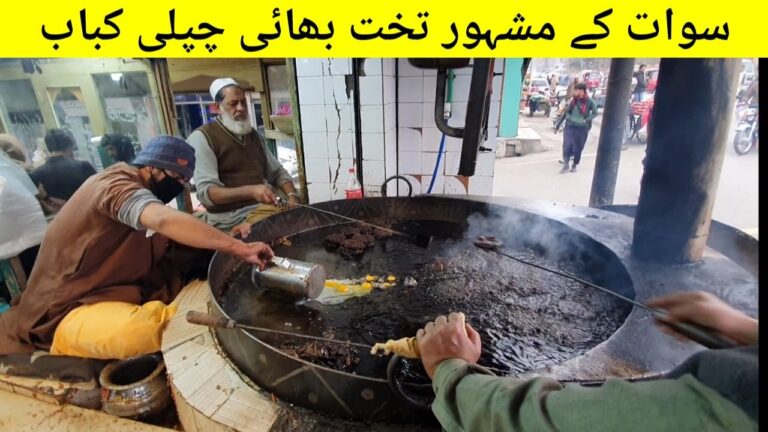
Fried in seasoned oil with beef suet: The dark oil you see at commercial kabab stalls comes from added beef fat (suet) and continuous frying. At home you can add a small piece of suet to the oil for a similar depth.
The Complete Peshawari Chapli Kabab Recipe
Note: In the video, the chef makes these kababs in a commercial batch (2 kg mince). The recipe card below uses the same 2 kg quantity and yields around 20–25 kababs — perfect for a family gathering or Bakra Eid. For a smaller home batch, halve every ingredient; the technique stays exactly the same.
Tips Before You Start
Get your mince from the butcher: Ask specifically for chapli kabab qeema — coarse machine-cut with about 20% fat. Home food processors give a paste-like texture that never crisps properly.
Squeeze the onions until they are almost dry: This is the single biggest reason home kababs break. After chopping, wrap the onions in a clean cloth and squeeze hard. You should be left with roughly one-third of the original volume.
Crush your whole spices fresh: Coriander seeds, cumin, and anardana should be coarsely crushed just before mixing — not powdered. This coarse texture is what you feel in every bite of an authentic Chapli Kabab.
Don’t skip the kneading time: 25–30 minutes of hand mixing feels long, but this is what releases the meat proteins that hold the kabab together. Skip it and no amount of corn flour will save you.
Keep the tawa on medium heat: High heat burns the outside before the inside cooks. Medium heat with enough oil for a shallow fry (about half an inch) gives the crisp brown edge Khyber Shinwari is known for.
Storage and Serving
Raw kabab mixture keeps in an airtight box in the fridge for 1–2 days. For longer storage, shape the kababs, lay them on a parchment-lined tray, freeze until solid, then transfer to a freezer bag — they’ll keep for up to 2 months. Fry directly from frozen, adding a minute or two to each side.
Cooked kababs are best eaten fresh off the tawa. If you need to reheat, warm them gently in a pan on medium-low, not the microwave (which turns them rubbery). Serve hot with warm naan or roti, a bowl of mint raita, a simple kachumber salad, and a squeeze of lemon on top. For a full spread, pair them with our Shinwari Mutton Karahi or Perfect Shinwari Karahi.
Peshawari Chapli Kabab (Khyber Shinwari Style)
Ingredients
Method
- Finely chop 1 kg onions. Wrap in a clean cloth and squeeze out as much water
- as possible — you should be left with roughly one-third of the original volume.
- Dry-roast cumin and coriander seeds for 30 seconds. Coarsely crush together
- with anardana in a mortar. Do not powder — coarse texture is key.
- Place the mince in a large bowl. Add salt and knead vigorously with your
- hands for 5 minutes until the meat feels slightly sticky.
- Add all crushed spices, red chili flakes, and black pepper. Mix for 5 minutes.
- Then add half the squeezed onions, mix 5 more minutes. Add remaining onions,
- mix another 5 minutes.
- Add finely chopped tomatoes, green chilies, and corn flour. Knead for 5 more
- minutes until the mixture is cohesive and holds its shape when pressed.
- Heat oil (with beef suet if using) in a wide tawa on medium heat. Wet your
- hands, shape into flat discs about 1 cm thick. Press a thin tomato slice on
- top. Fry 4-5 minutes per side until deep golden brown and crisp at edges.
Video
Notes
they feel almost dry. Do not skip the 25-minute kneading — this is what develops
the natural stickiness that holds the kabab together without any egg. For deep
authentic flavor, fry in oil with a small piece of beef suet added.
Frequently Asked Questions
Why do my Chapli Kababs fall apart in the pan?
Three things cause this — and all three usually happen together. Your onions have too much water in them (squeeze until they feel almost dry), you haven’t kneaded the mince long enough (the full 25–30 minutes matters), or you’ve skipped the corn flour. Fix these three and your kababs will hold their shape without needing an egg.
Can I make these without going to the butcher?
You can, but the texture won’t be the same. Supermarket mince and home food processors give a paste-like consistency that turns dense when fried. If a butcher isn’t an option, ask your local qasai to run the meat through a coarse plate — takes them two minutes and makes a noticeable difference.
What makes Peshawari Chapli Kabab taste different from other kababs?
Two things — anardana (dried pomegranate seeds) and the coarse texture. Anardana gives that tangy, slightly sour note that no other kabab has. Combined with coarsely crushed coriander and cumin (not powdered), you get the rustic Peshawari flavour you can’t get from a smooth, blended mix.
Can I mix the kababs a day before?
Yes, and the flavour actually improves overnight. Mix everything, cover the bowl tightly, and keep it in the fridge for up to 24 hours. Take it out 30 minutes before you plan to fry so the mixture comes back to room temperature — cold mince won’t cook evenly.
How do I scale this recipe for Bakra Eid or a bigger gathering?
The recipe scales cleanly. For 5 kg mince, use 2.5 kg onions, 250g corn flour, and multiply the spices by 2.5. Kneading time stays the same regardless of quantity — 25–30 minutes — but you’ll need a bigger vessel and stronger arms. For very large batches (10 kg+), it’s easier to work in two rounds than one massive bowl.
Can I use chicken or mutton instead of beef?
Mutton works perfectly — same recipe, same technique. Chicken works too but you’ll need to add extra fat (a spoon of ghee or butter into the mince) because chicken is much leaner and can turn dry. Cooking time for chicken is shorter, so watch the pan.
Join the Cooking with Kawish Community
Instagram: @cooking_with_kawish — Tag us to get featured!
Facebook: Cooking with Kawish
YouTube: Subscribe for new recipes
TikTok: @cookingwithkawish
Happy Cooking!