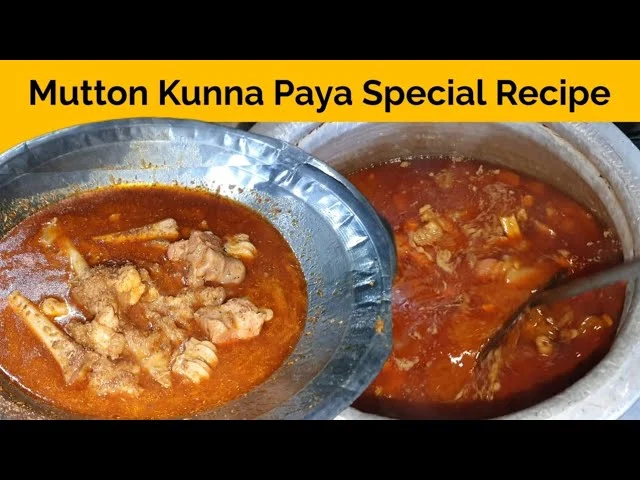
Ingredients
Method
Step 1: The Dual-Pot Strategy
- Since trotters take much longer to cook than meat, start by preparing two separate pots (Deghs). In both pots, add cooking oil and a generous amount of ginger-garlic water/paste along with sliced onions.
Step 2: Seasoning the Meat and Paya
- Divide your spices. Add red chili powder, coriander powder, and turmeric to both the Mutton pot and the Paya pot. For a commercial taste, use approximately 1 tablespoon of each spice per kg of meat. Add salt to both pots.
Step 3: Slow Cooking Process
- Add mutton stock (yakhni) or water to both pots. Cover and cook. The Mutton will take about 2-3 hours to become tender, whereas the Paya (trotters) must be cooked on a very low flame for 6-7 hours until they are completely soft and gelatinous. Check every 2 hours and add water if needed.
Step 4: Creating the Kunna Texture
- Once the mutton is tender, prepare a slurry by mixing wheat flour with water. Gradually add this to the mutton pot while stirring. This creates the thick, silky gravy characteristic of a "Kunna." Let it simmer for 15-20 minutes.
Step 5: Thickening the Paya
- Repeat the flour-slurry process for the Paya pot once the trotters are fully cooked (after 6 hours). Let it cook for another 20-25 minutes until the gravy thickens and becomes sticky.
Step 6: The Ultimate Combination
- Now, pour the cooked Paya into the Mutton pot. Combine them carefully. This is the stage where the two distinct flavors merge into one royal dish.
Step 7: The Master Stroke (Kunna Masala)
- Sprinkle the "Special Kunna Masala" (the roasted powder of Nutmeg, Mace, Cardamoms, and Cumin) over the combined pot. Cover and simmer for a final 10 minutes. This provides the signature aroma that can be smelled from a distance.
Video
Notes
Pre-Boiling Paya: Always boil the trotters once in plain water and discard that water before starting the recipe to remove any "meaty" smell.
Low Flame: Authentic Kunna Paya is never rushed. The longer it simmers on a low flame, the stickier and tastier the gravy becomes.
The Flour Secret: Don't add too much flour at once. The gravy should be thick but smooth, not like a heavy paste.